
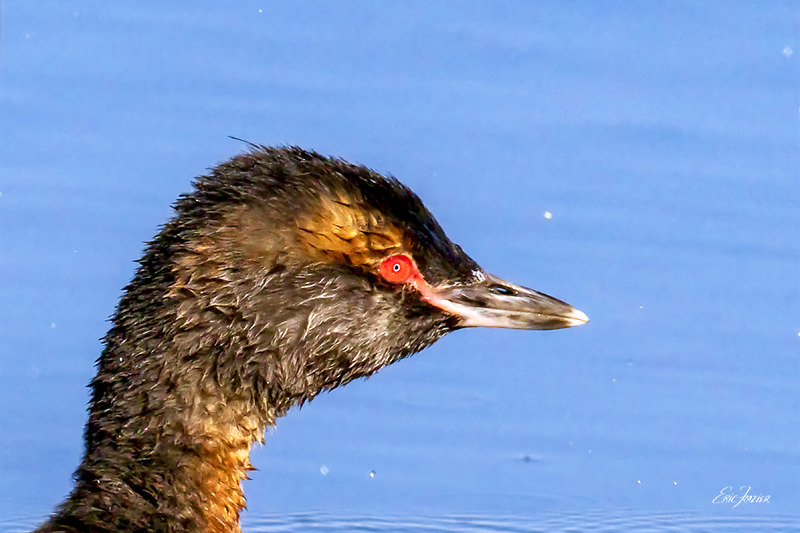
Lake Myvatn (midge lake) in northeast Iceland is a breeding spot for Slavonian Grebes, a rare and threatened species of compact diving waterbirds with golden ear tufts and red and yellow eyes that look like a Category 5 hurricane on weather radar.
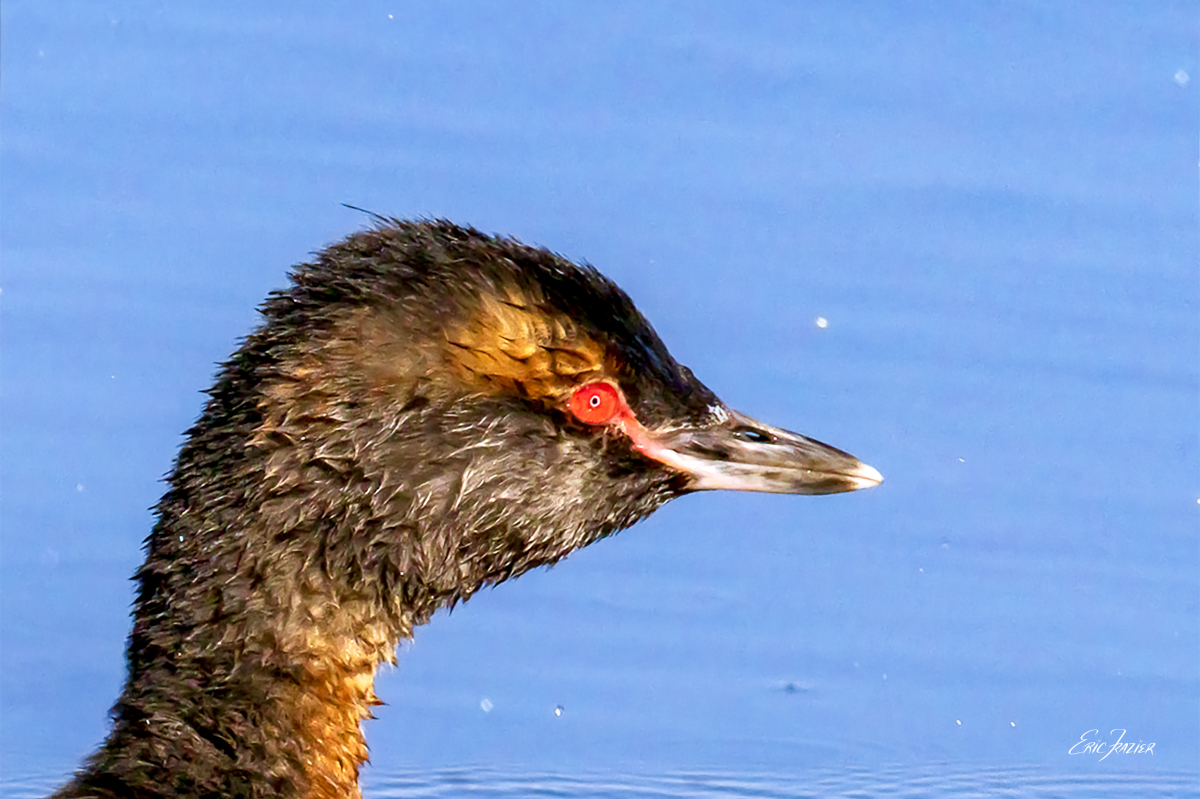
Captured August 14, 2026, by Eric F. Frazier.
The name “Slavonian” derives from European breeding grounds in old Prussia, but the species is known in America as the Horned Grebe for those golden tufts. The Slavonian subspecies are the only grebes that breed in Iceland, mainly around Lake Myvatn.
Their diets are heavy on fish and crustaceans in winter and aquatic insects and arthropods in warmer weather. The birds eat their own feathers to create a sort of internal filter that helps them digest fish bones.
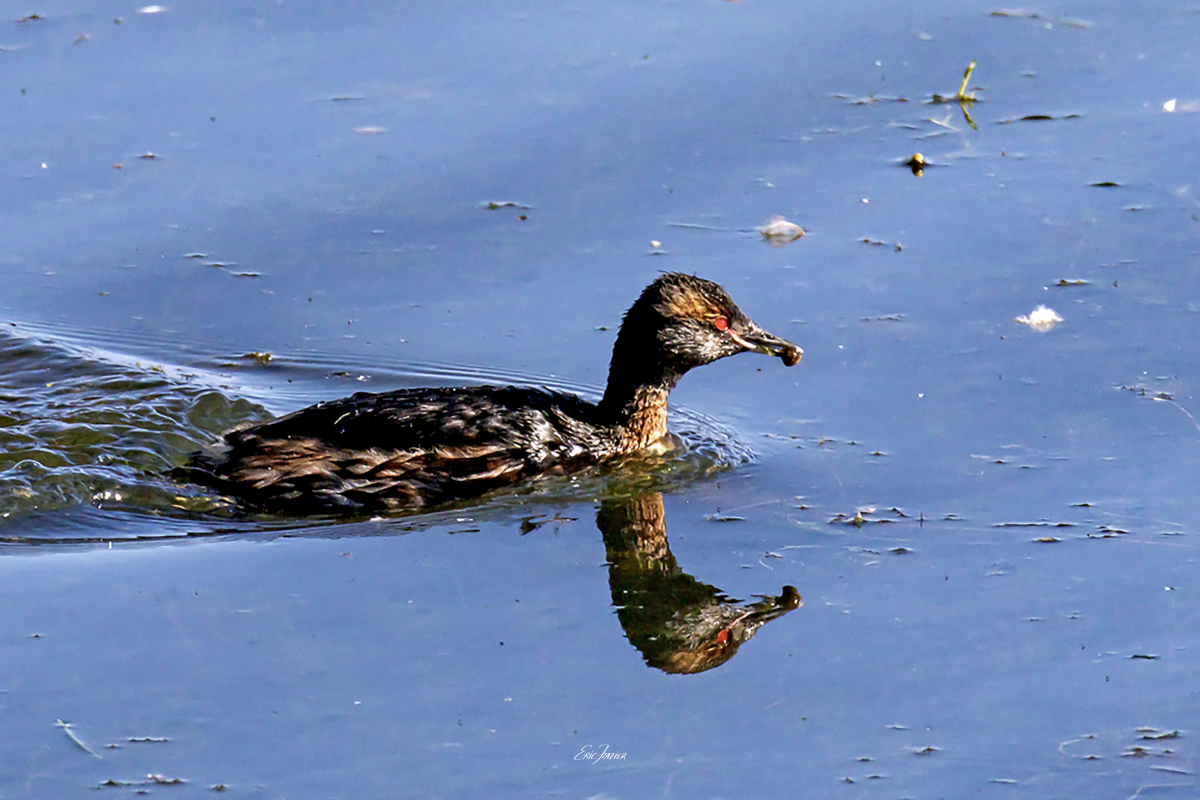
Captured August 14, 2026, by Eric F. Frazier.
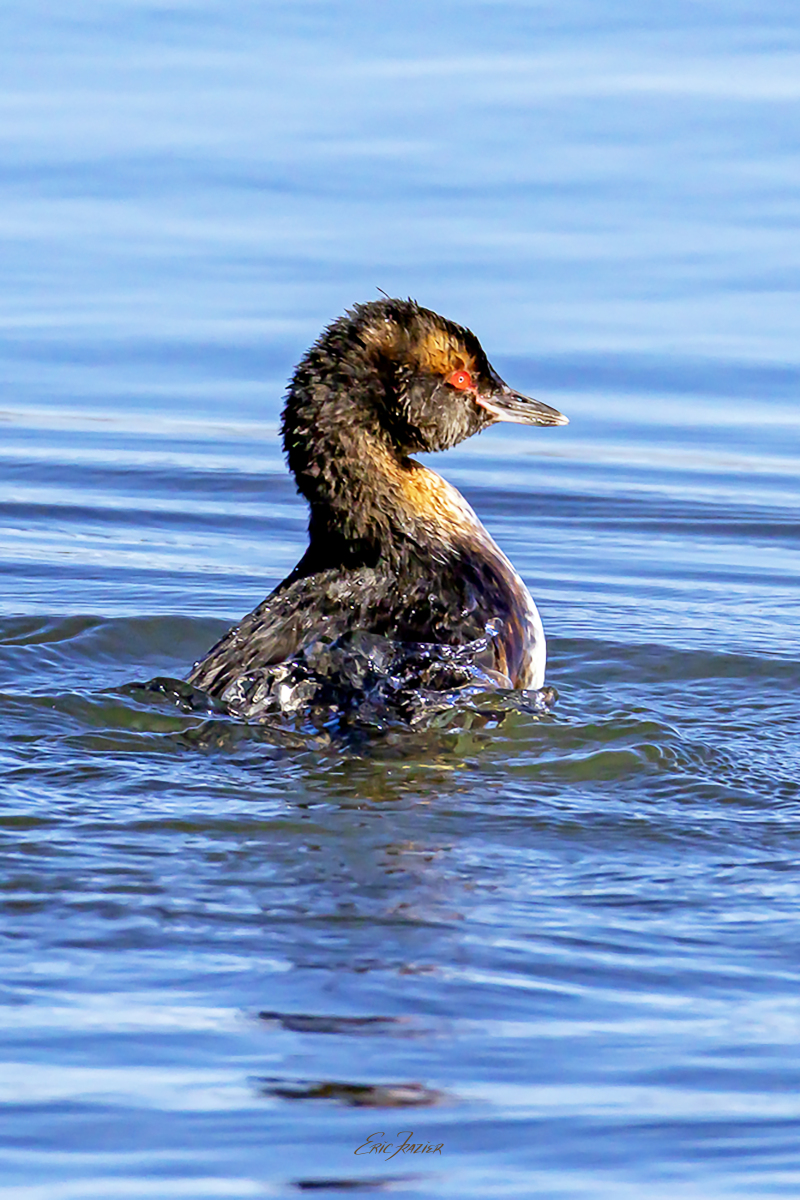
Captured August 14, 2026, by Eric F. Frazier.
I saw this Slavonian Grebe in mid-August. The golden tufts are not as prominent then as during spring mating, but he is probably a juvenile. They mature sexually at two years. Those fiery eyes, however, are a permanent feature. I enjoyed watching him bathe in shallow water, and when I returned home and read more about these birds, I wondered if some of the wing drying gestures I saw were practice for next spring.
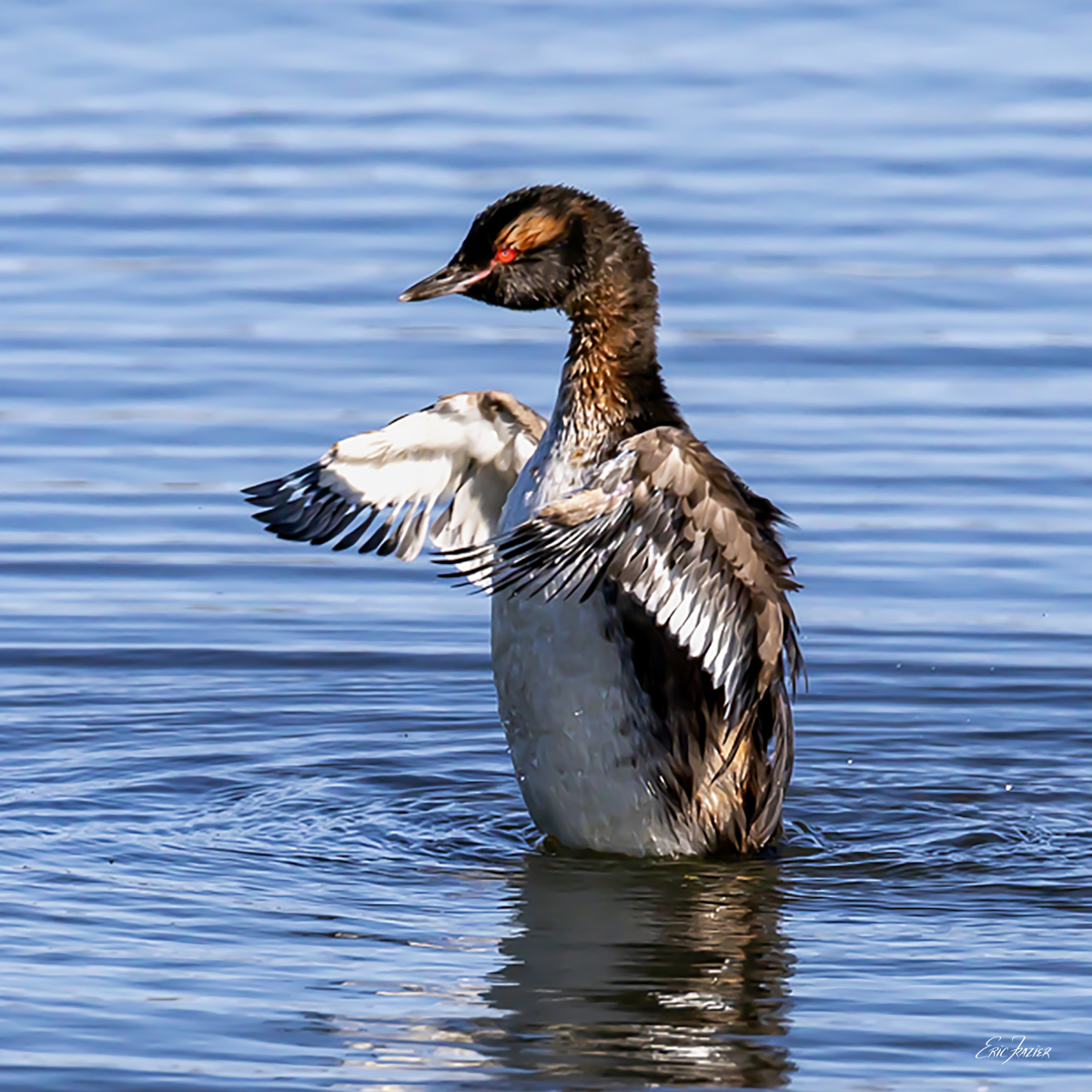
Captured August 14, 2026, by Eric F. Frazier.
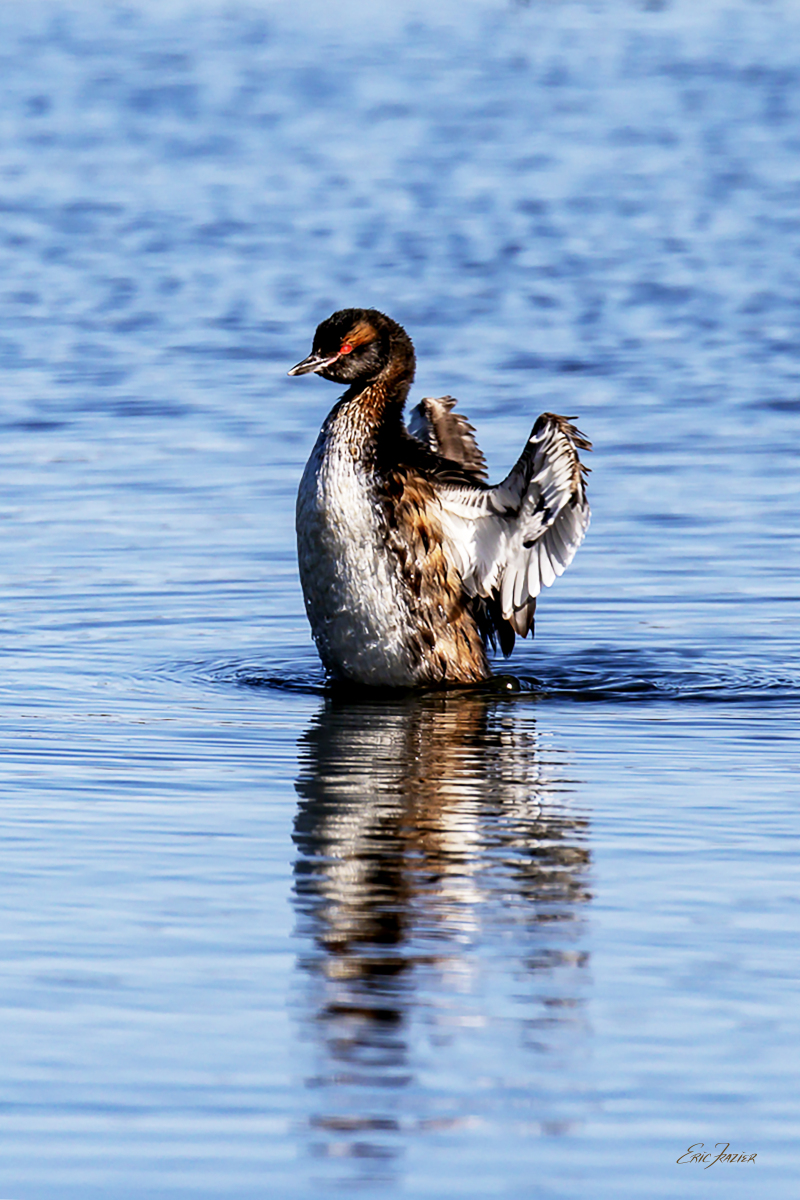
Captured August 14, 2026, by Eric F. Frazier.
Famous for their mating dance
Horned Grebes are monogamous, starting with an elaborate pair-bonding routine. The males flare their horns and call out. When females appear, the two check each other out for suitability as mates. They preen and penguin dance, synchronously dive and surface with weeds, and do a lot of head shaking before getting down to business.
They build nests of plant material along the shore, sometimes floating, and share incubation duties. Chicks often ride on a parent’s back and fly at a couple months. However, the worldwide population has declined 30% over the past 30 years due to habitat loss and dietary competition with rainbow trout introduced into breeding sites.
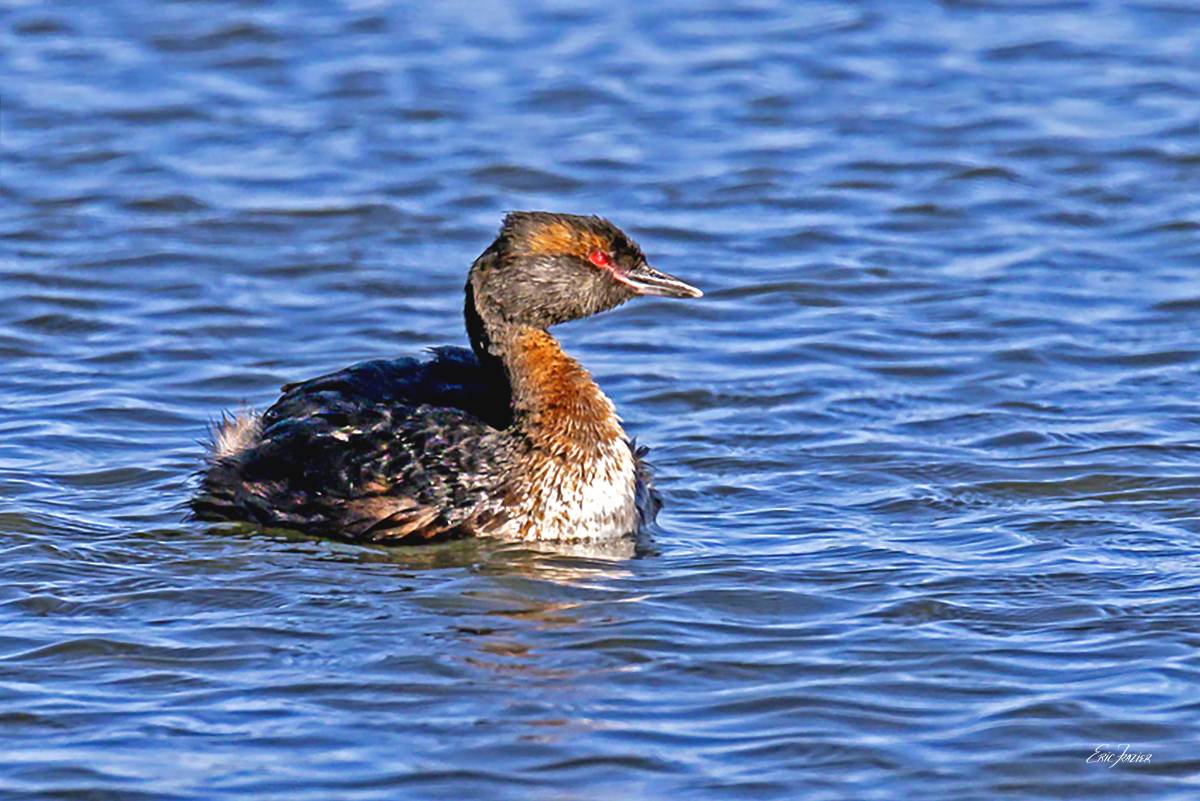
Captured August 14, 2026, by Eric F. Frazier.
This was our second trip to Iceland, timed for the solar eclipse. Now, having seen and learned about Slavonian Grebes, I must return someday in the springtime to witness that mating dance.