
Whenever I’m out hunting for birds to photograph, I scan the treetops for hawks that are out hunting their own prey. Their favorite hunting grounds are natural areas with water sources and tall trees, and so are mine.
The hawks I most often find are Red-shouldered Hawks, a populous, year-round species across the southeastern United States and along coastal California.
Spotting a Red-shouldered Hawk
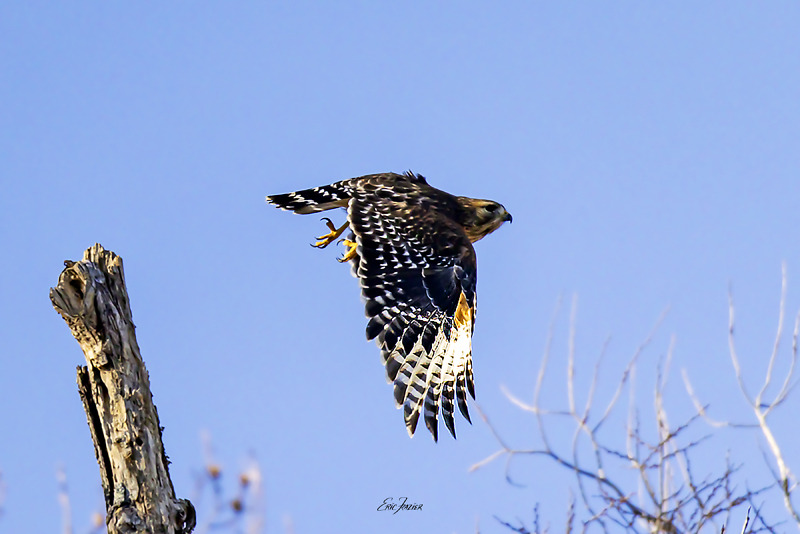
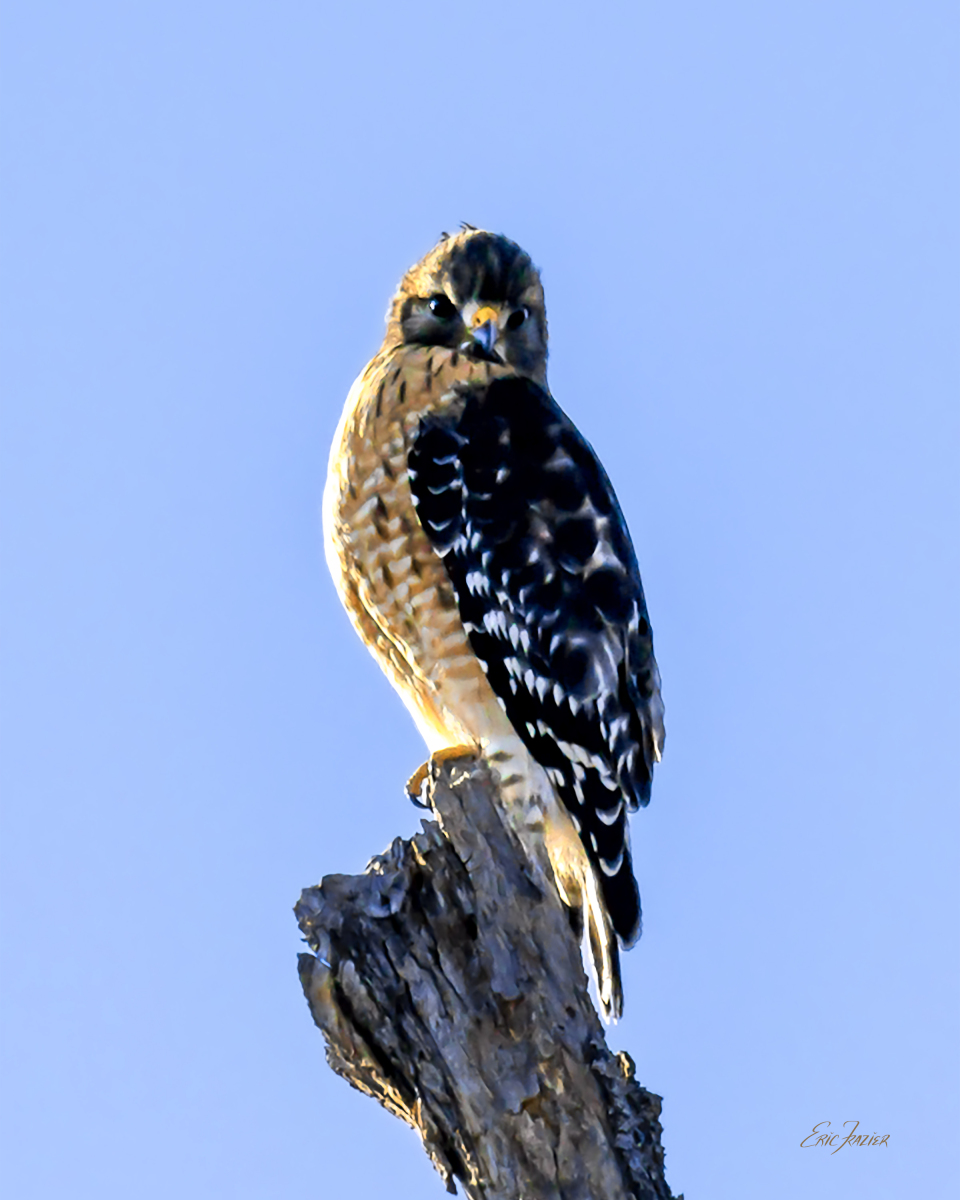
Red-shouldered hawks (and a few close relatives) have a signature silhouette that is easy to spot once you learn it and know where to look. They usually perch upright, presenting an almond-shaped body measuring 16 to 24 inches. Up top, their heads rotate methodically, like a tank turret with hooked beak, surveilling all compass points. From the front, you’ll see mottled rust and white plumage, and from the back, dark, checkered wing and back feathers and a banded black tail.
With up to 4-foot wingspans, their favorite perches are tall trees with open branches and especially the bare stubs of dying or dead trees, where they can use their flexible necks and keen vision to scan the ground and launch an attack in any direction. They eat mostly small critters—mice, voles, chipmunks, lizards, snakes, frogs, toads, and occasionally, songbirds.
Compared to a human’s 20/20 vision, scientists estimate Red-shouldered Hawk’s eyes measure 20/5. Their eyes are positioned forward for binocular vision, but they have a wider field of view, and detect ultraviolet rays invisible to people. And they have photo-receptors that act like motion detectors, enabling them to see prey movements on the ground while in flight.
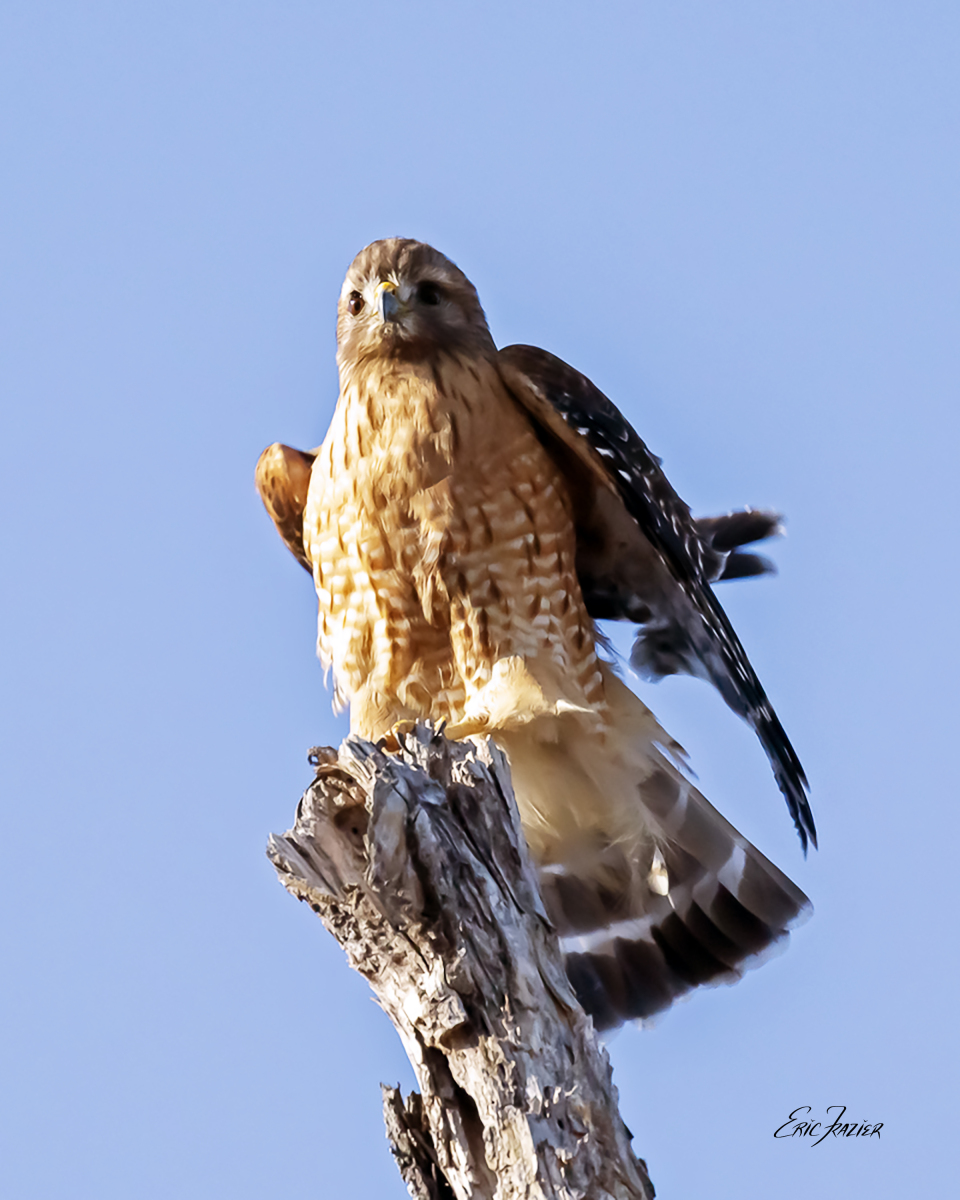
Captured February 1, 2026, by Eric F. Frazier.
Capturing the Front, Back and Sides
One day after a major storm, with crystal clear skies and late, low-angle sun, I went hunting the hunters. I spotted a Red-shouldered Hawk’s silhouette about 30 feet above our community greenway trail that follows Little Brier Creek.
Drawing closer, the size and bold coloration suggested a male. He’d positioned himself at a sort of inside corner of the forest edge, where the paved trail takes a sharp right angle around a pond spillway and over a footbridge. Lots of open, boggy ground to peruse for dinner.
This geography offered only two angles for me to shoot from close range without donning waders. On approach, the bird was mostly backlit, the intense sunlight setting the rust and white breast plumage aglow and casting the dark back and wing plumage in shadow. The hawk gazed at me as if posing in a studio. Yes, tilt your head a little. Thank you, sir.
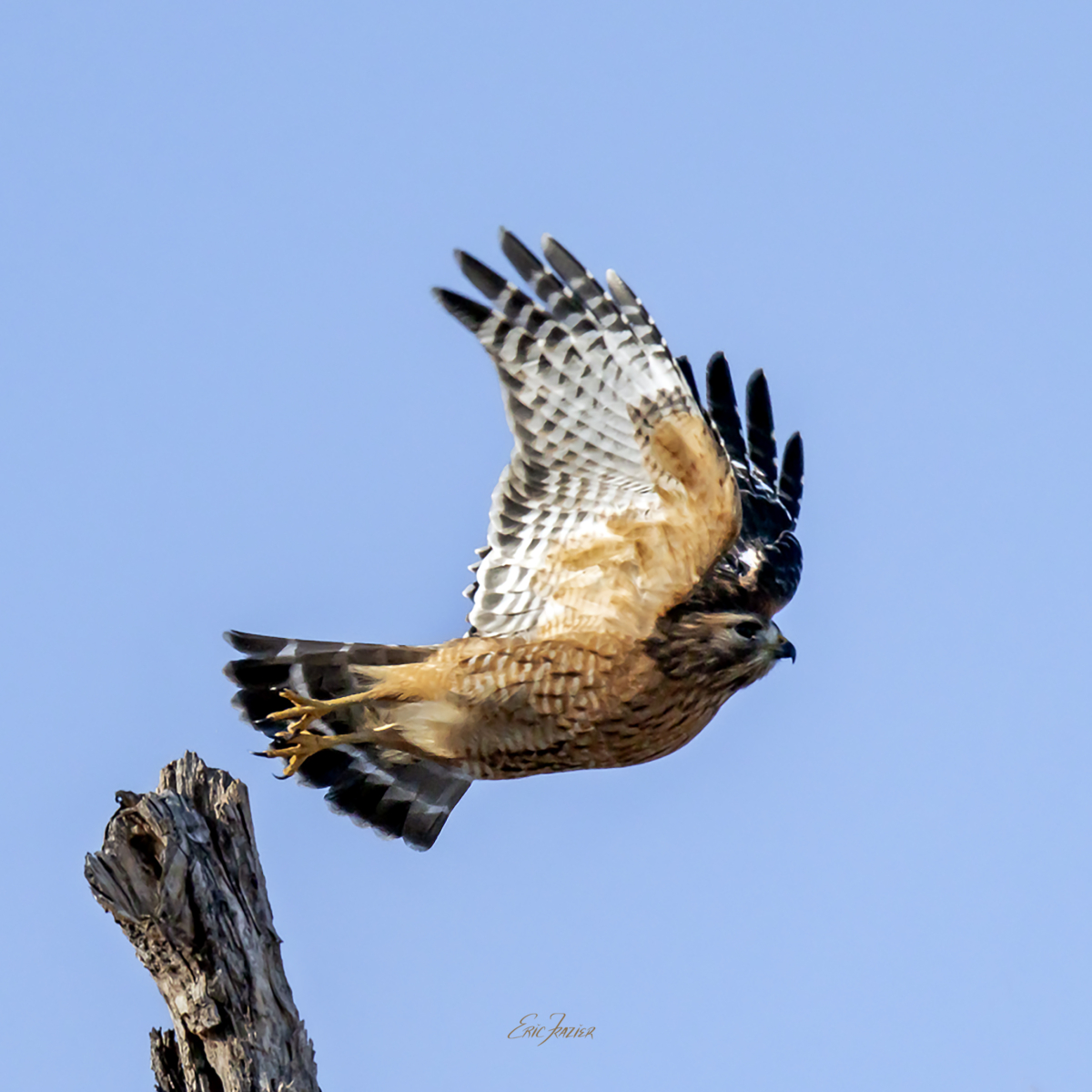
Captured February 1, 2026, by Eric F. Frazier.
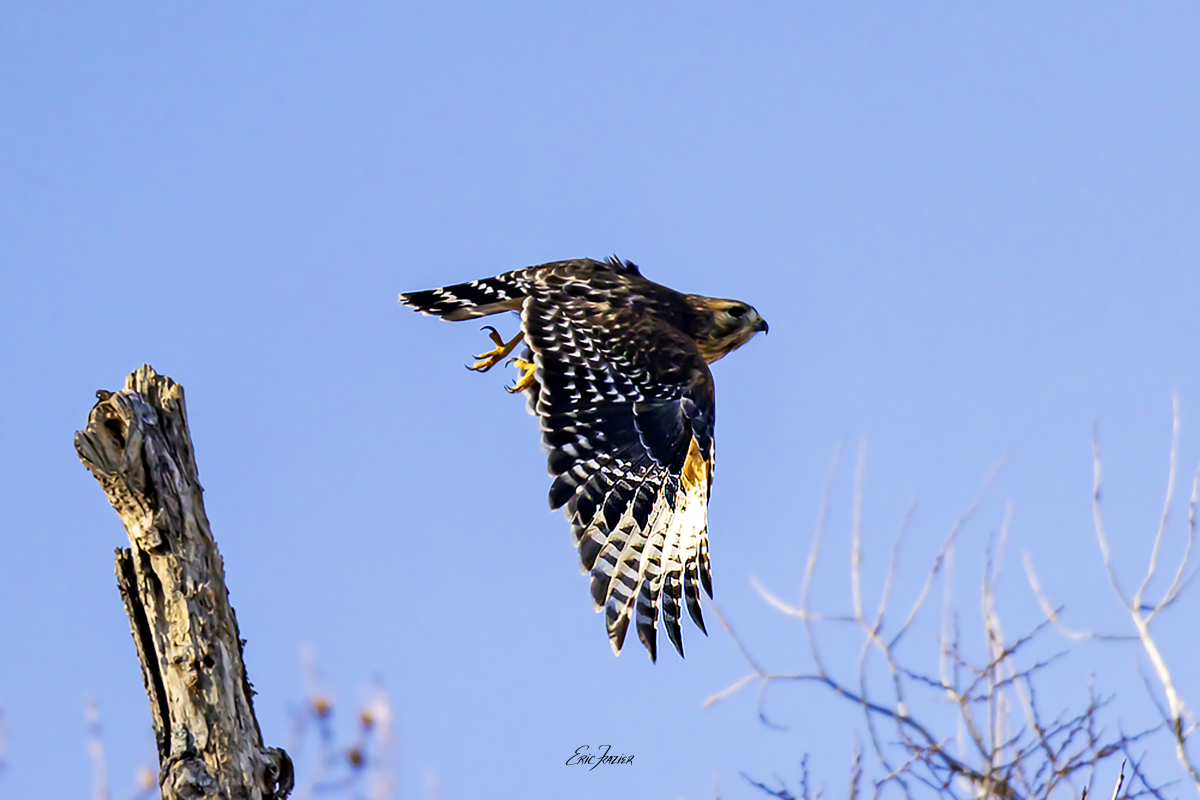
Captured February 1, 2026, by Eric F. Frazier.
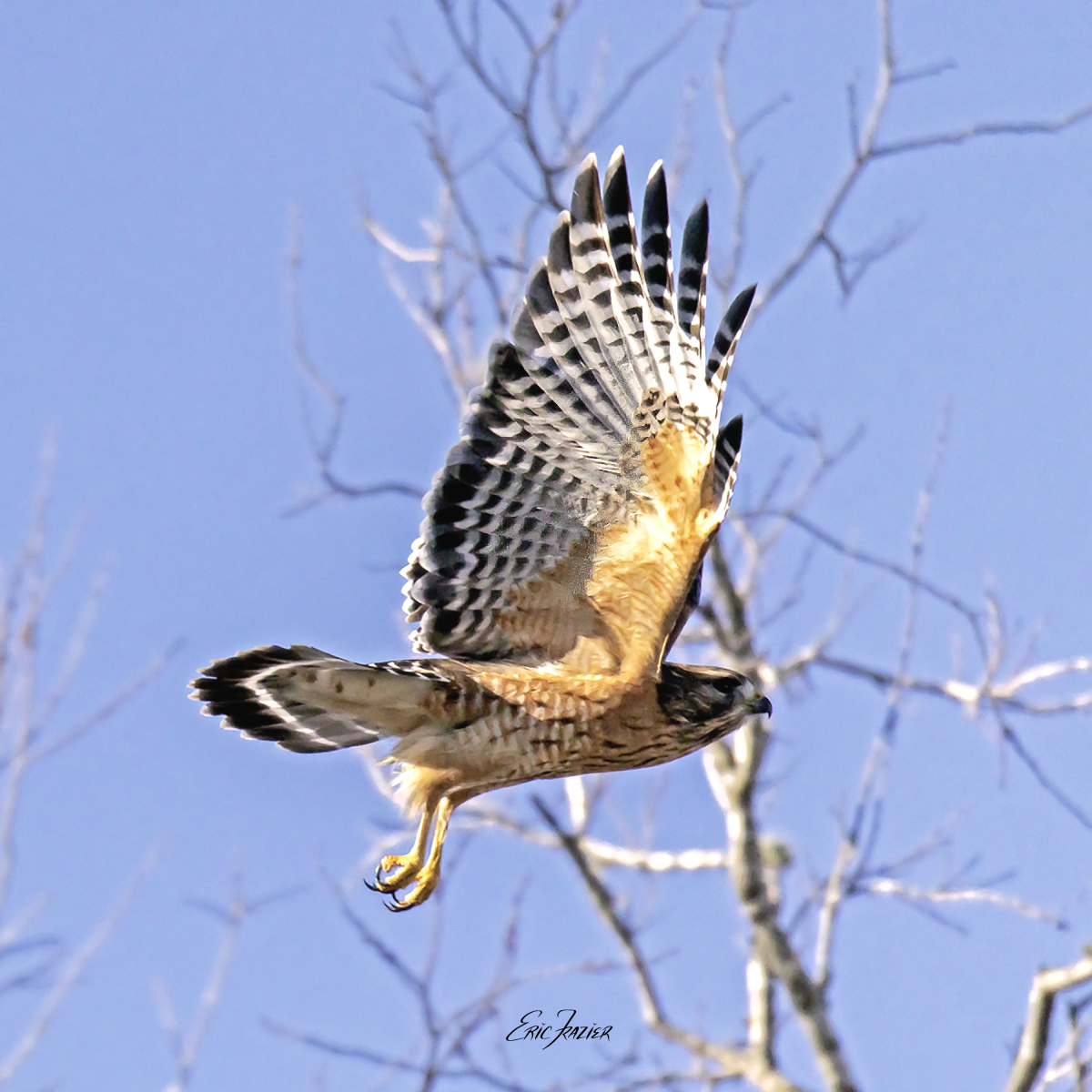
Captured February 1, 2026, by Eric F. Frazier.
After I rounded the corner and took aim from the other direction, the sun shone like a spotlight on the raptor. But this was no studio. Rising wind gusts began making the bird restless. Sensing he might fly, I widened my view a bit, and he soon launched. I was able to capture his first few wing beats, providing good looks at his intricate markings all over.
I never tire of this kind of hunt.