
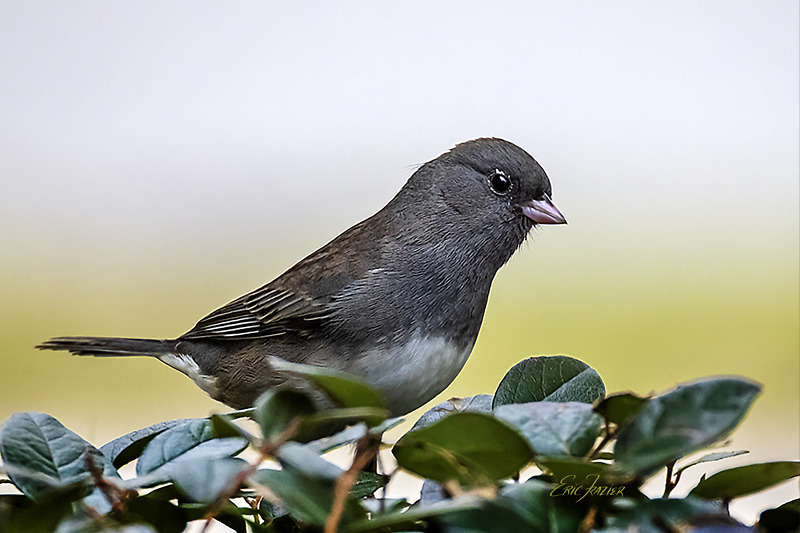
I like Dark-eyed Juncos even though they often kick mulch onto our front sidewalk. Given their small size as sparrows, the inconvenience is less than that of Mourning Doves and Brown Thrashers, two other offenders that I am happy to have around.
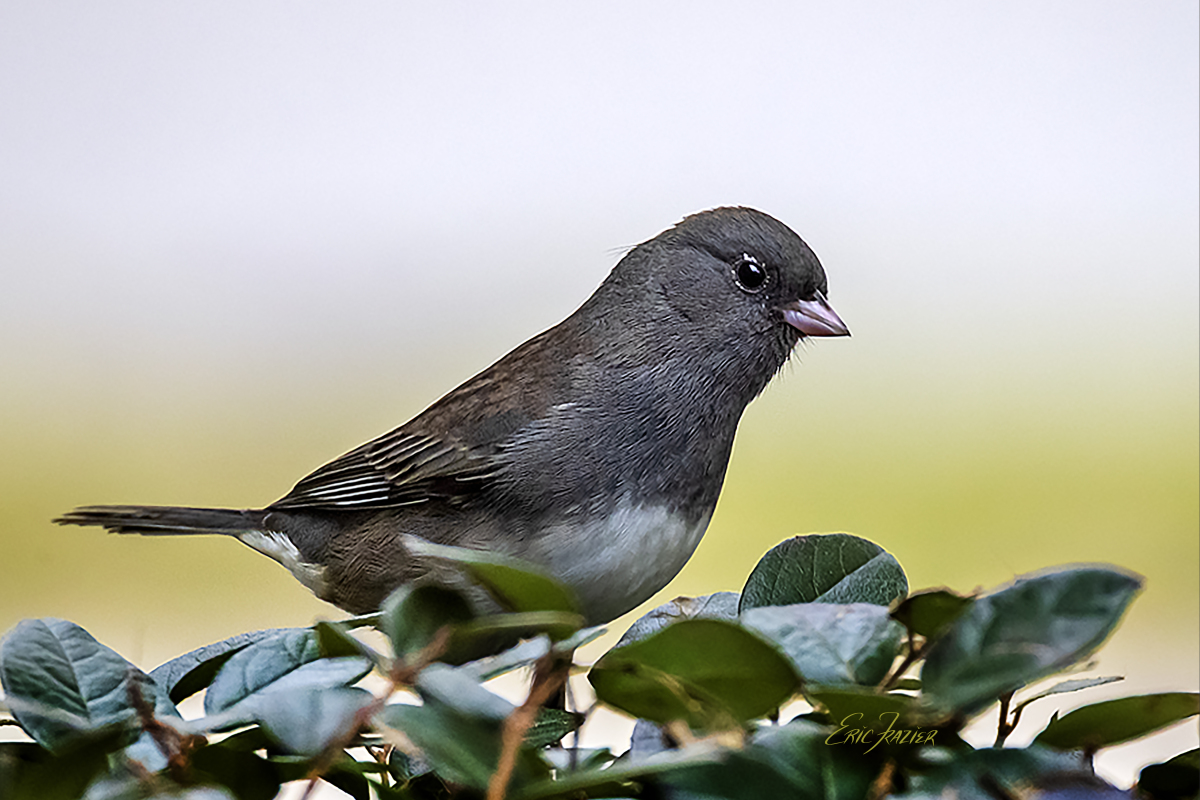
Captured November 10, 2024, by Eric F. Frazier.
Winter Residents Across U.S.
These energetic ground feeders don’t mind the cold. They live year-round in the western mountains, spend summers breeding in Canada, and then fan out across the United States and northern Mexico for the winter. Dark-eyed Juncos are common, but many subtle variations exist in their basic dark-top/white-underside appearance.
Juncos visit feeders, but larger birds often crowd them out. No problem. Plenty of seeds fall to the ground, and juncos love feeders beside bushes (like ours), where they can forage under cover. They also feed in trees and shrubs but excel at scouring the ground for seeds, nuts or berries that have dropped. When available, they prefer insects.
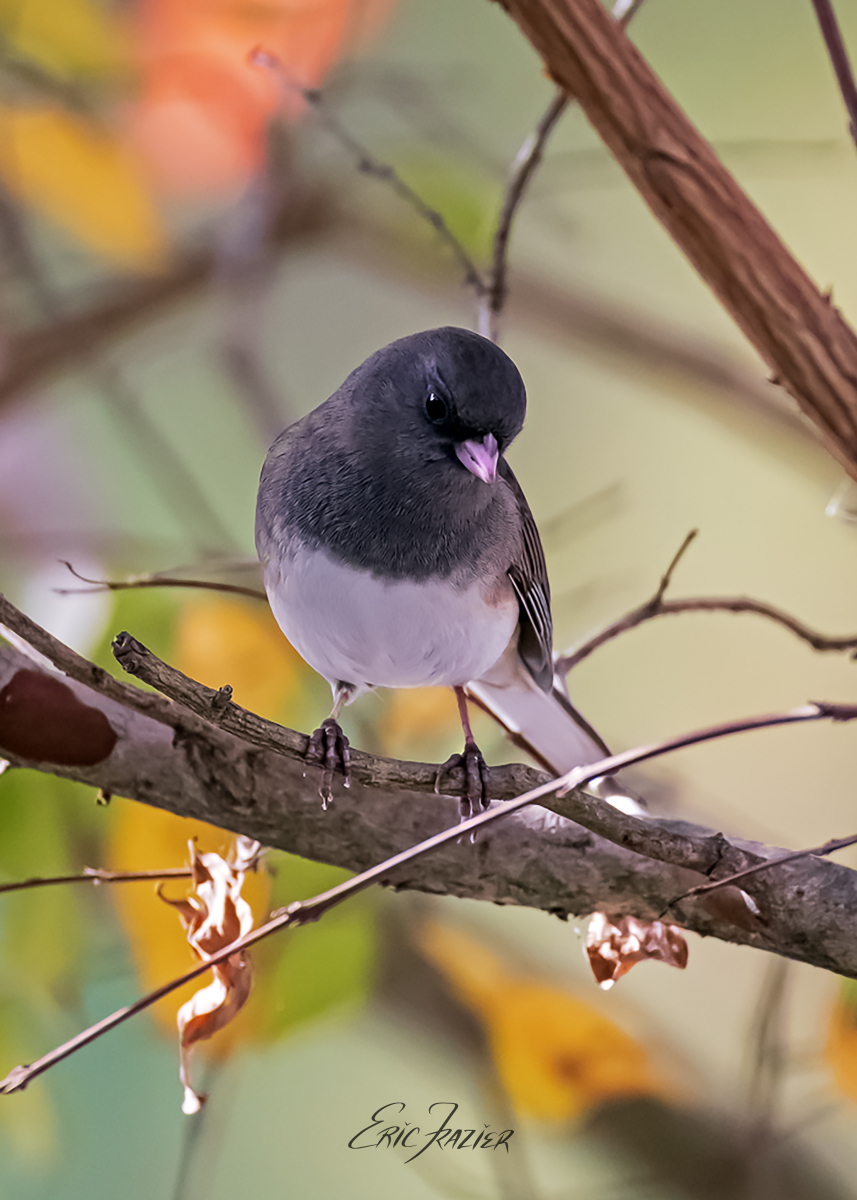
Captured November 10, 2024, by Eric F. Frazier.
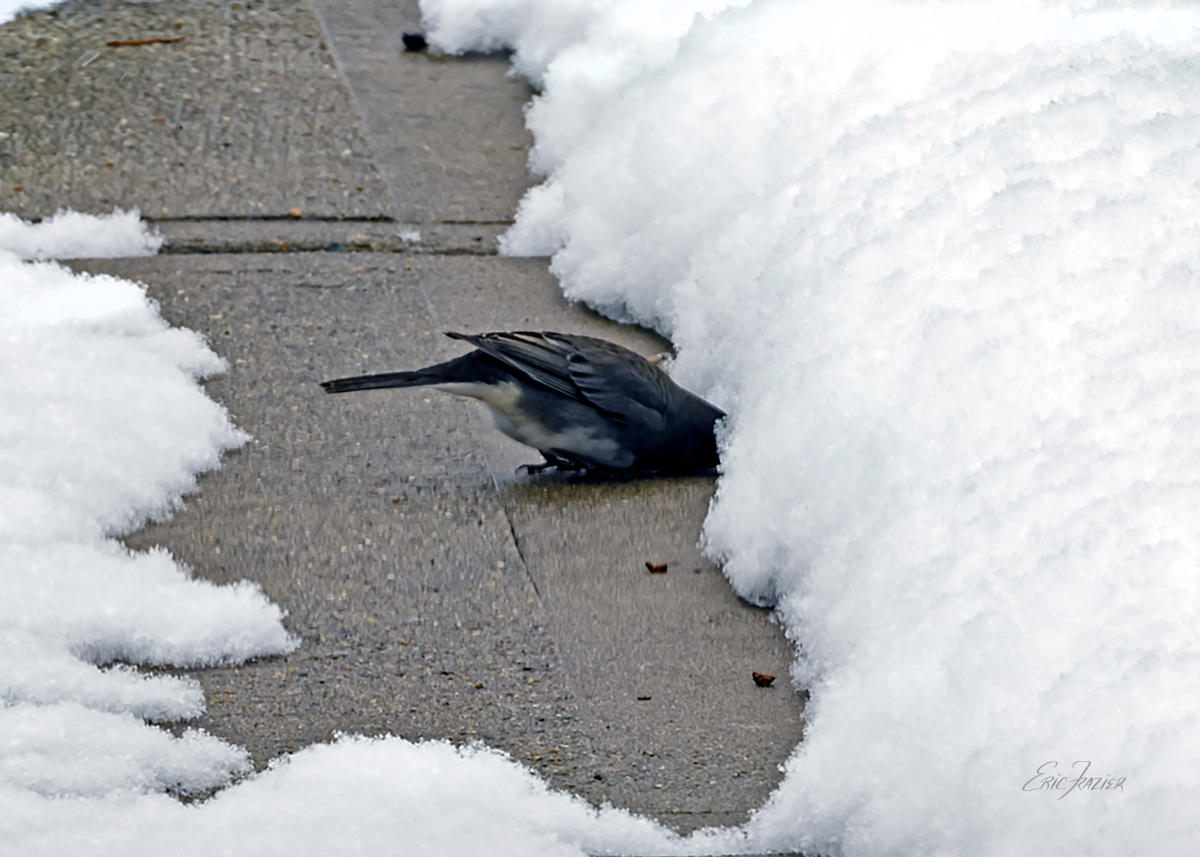
Captured February 20, 2025, by Eric F. Frazier.
I’ve photographed Dark-eyed Juncos in many settings, from fall foliage to foraging under snow. Catching the light reflected in a junco’s dark eyes can be a challenge. When you do, they sparkle like onyx.
Other birds have dark eyes, but after seeing some of their eyeballs lit by sunlight strong enough to discern the colored iris, I’ve wondered what a juncos dark eyes are hiding. This fall, a recent returnee hopped past a shaft of light that struck his protruding eyeball from behind–revealing a glowing amber iris.
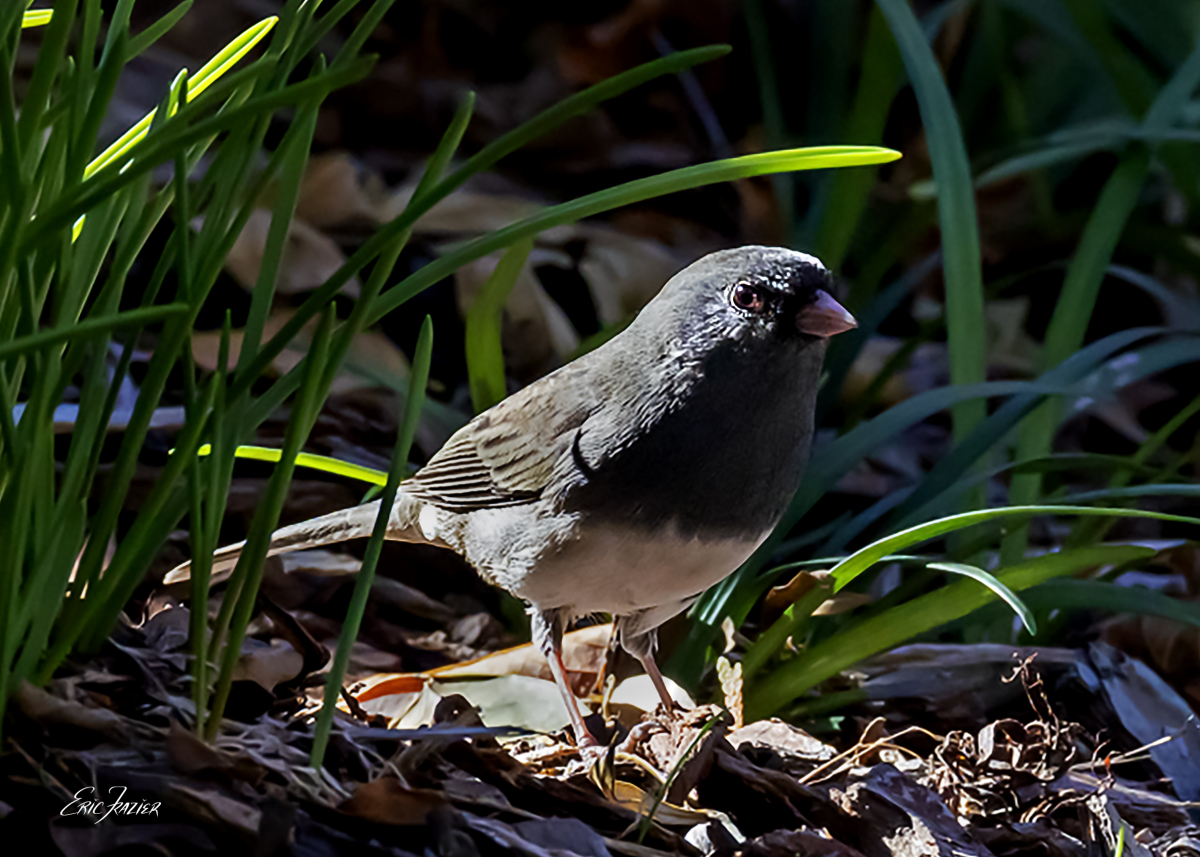
Captured November 4, 2025, by Eric F. Frazier.
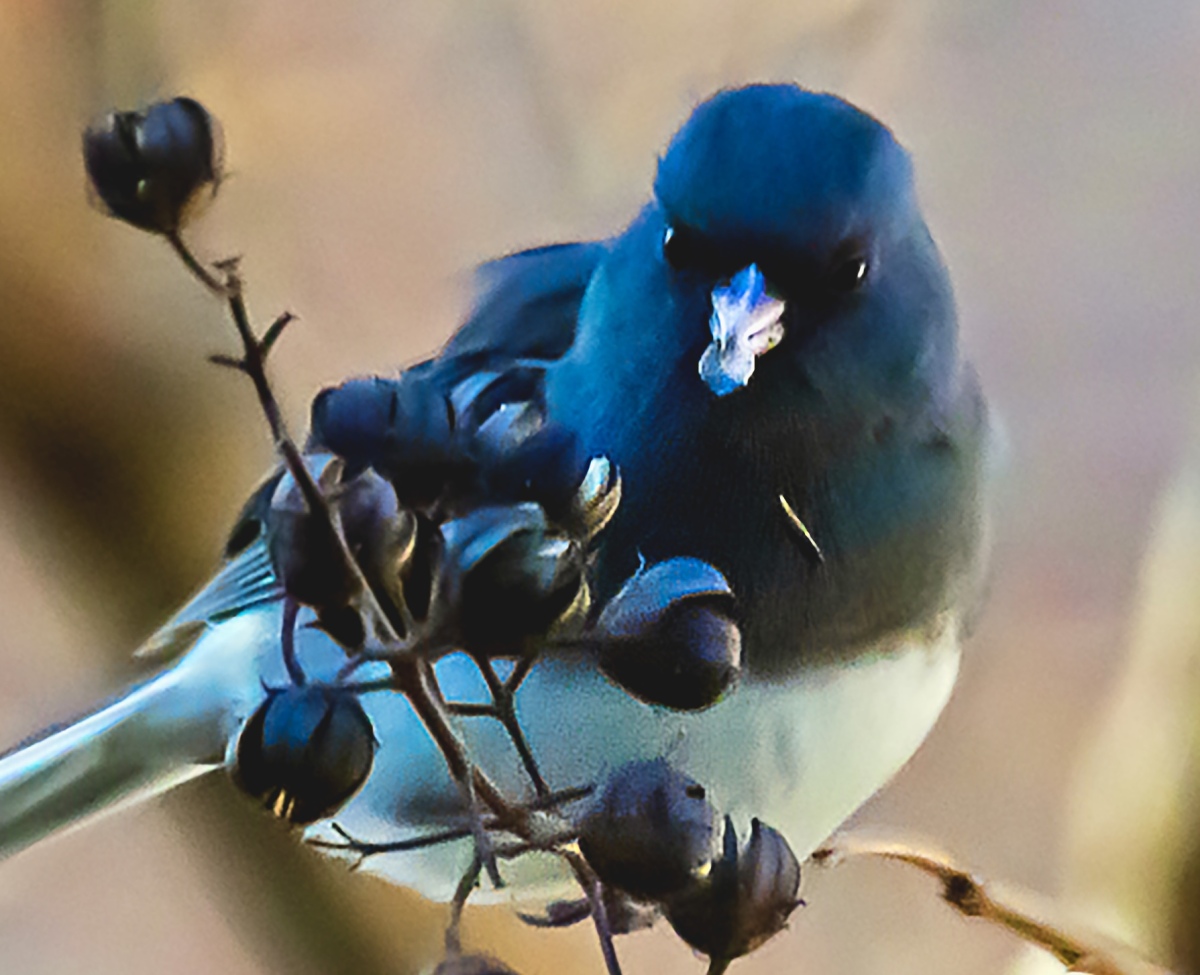
Captured December 5, 2024, by Eric F. Frazier.
What’s with the Dark Eyes?
Why do some bird’s eyes, like juncos, look pitch black in direct light, while others, like owls and hawks, appear yellow or orange?
Eye pigmentation in birds covers the spectrum and can change as they age. Whether you see color depends on how the pigment absorbs or reflects light. But ornithologists have studied the genetics of eye color in only about 2% of bird species. How and why birds evolved their eye colors is speculation.
Factors could include camouflage, tolerance for glare, or sexual attraction. Variations within species suggests eye color might be a marker for sex, age, or mate quality.
I’ve noticed that eye color seems loosely correlated to bill color. Eagles and herons, both predators, tend to have yellow eyes and bills. Meanwhile, most songbirds and ground feeders have dark eyes and dark bills.
Could eye color be influenced by how far away food is located? Maybe, but juncos have dark eyes and pink bills. And hard-to-see amber irises.
Anyway, if the Junco’s dark eyes are nearsighted, like mine, that might explain my affinity for these familiar winter residents.