
During a June vacation at Isle of Palms, S.C., I saw firsthand how Red-tailed Hawks adapt to natural and man-made differences in their environment.
With their keen eyesight and large wingspans, hawks seek out the highest open perches with unobstructed views. That usually means treetops—but not always.
Back home, in the leafy, low-rise suburban landscape where Durham and Raleigh converge, tall hardwoods tower above single family homes and even some two- and three-story townhouses and apartments. Those treetops are where I most often see hawks perched.
At Isle of Palms, despite the high density of houses, trees abound. But trees are shorter overall due to strong winds, sandy soil and salty air. The tallest rooftops, chimneys and railings protrude above the tree canopy. Hawks have made them favored perches.
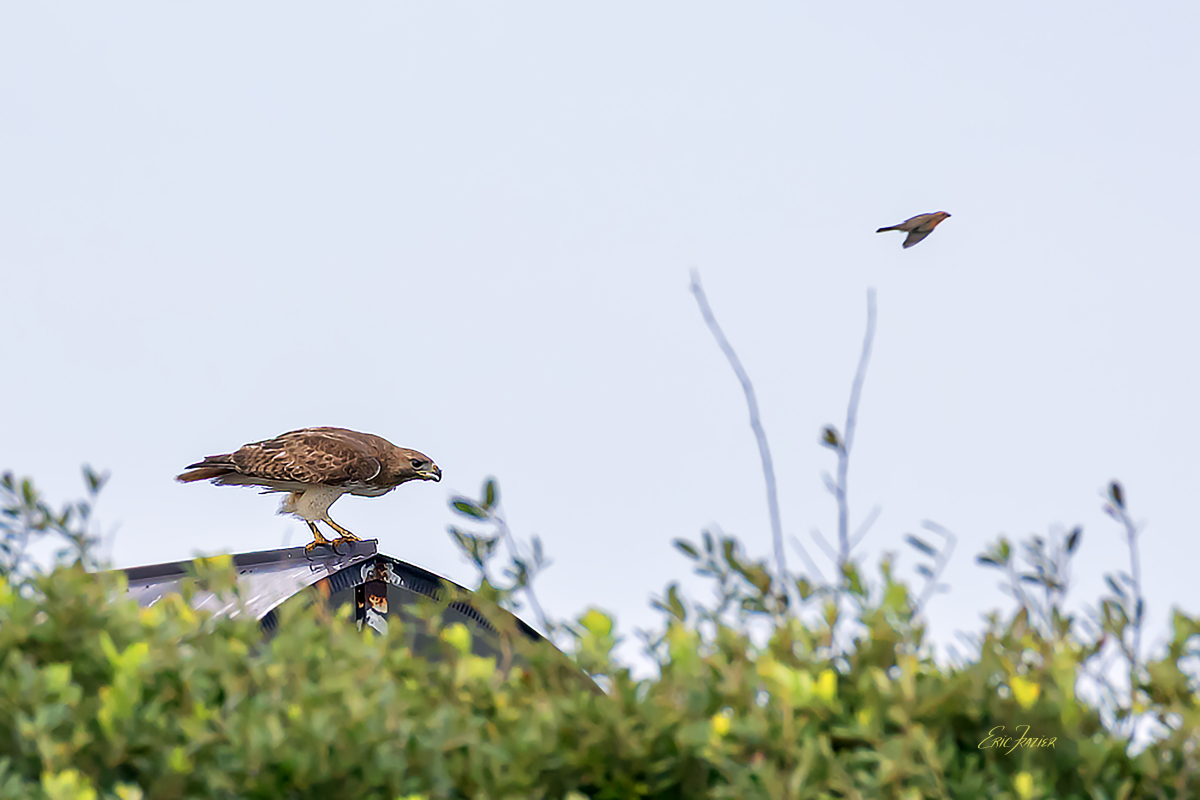
Captured June 25, 2026, by Eric F. Frazier.
We rented a three-story, second-row house with a rooftop deck. It put me among the treetops and offered great views of birds in flight.
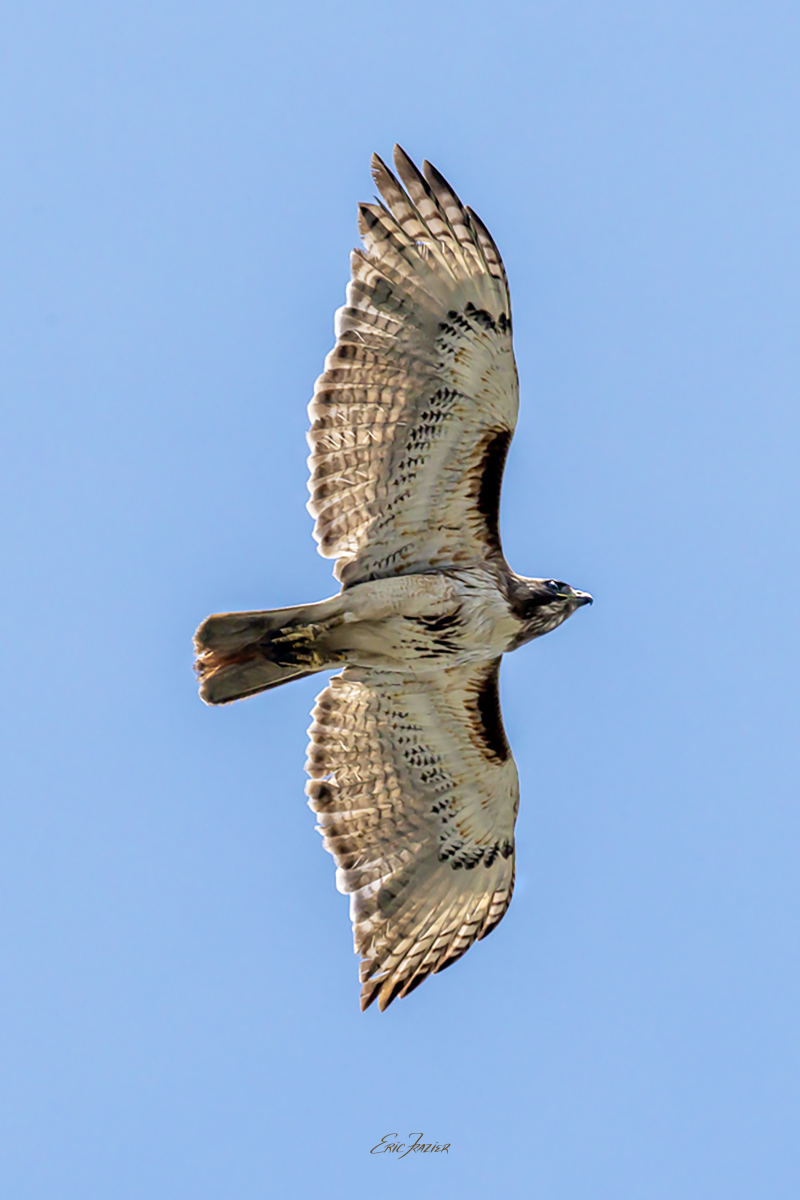
Captured June 21, 2026, by Eric F. Frazier.
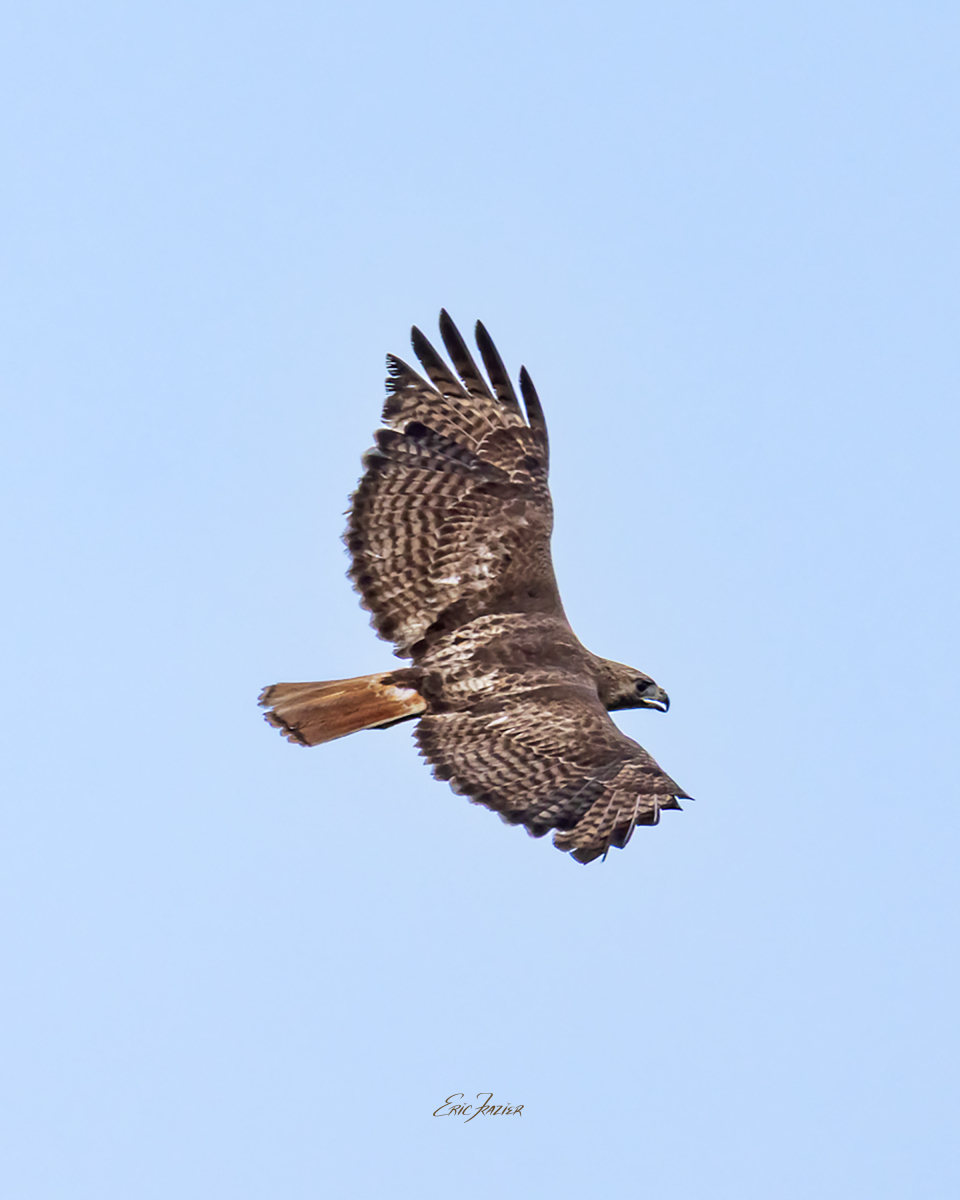
Captured June 21, 2026, by Eric F. Frazier.
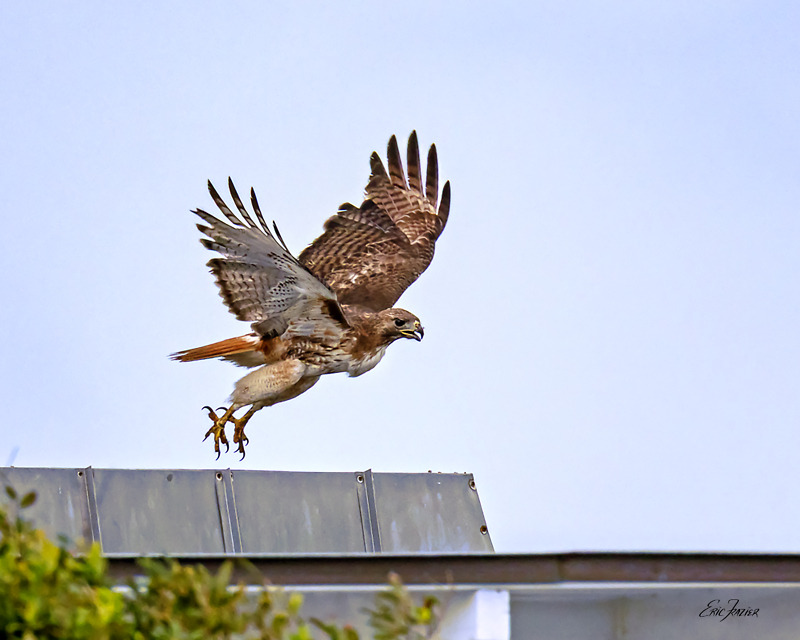
A Red-tailed Hawk landed on a utility pole about 25 feet from the deck and sat calmly at eye level while I made photos. It was so close, I could not zoom out to capture its departure. But when it perched on a nearby home, and then took off into the stiff sea breeze, I was able to capture a shot showing all parts of the raptor in motion.
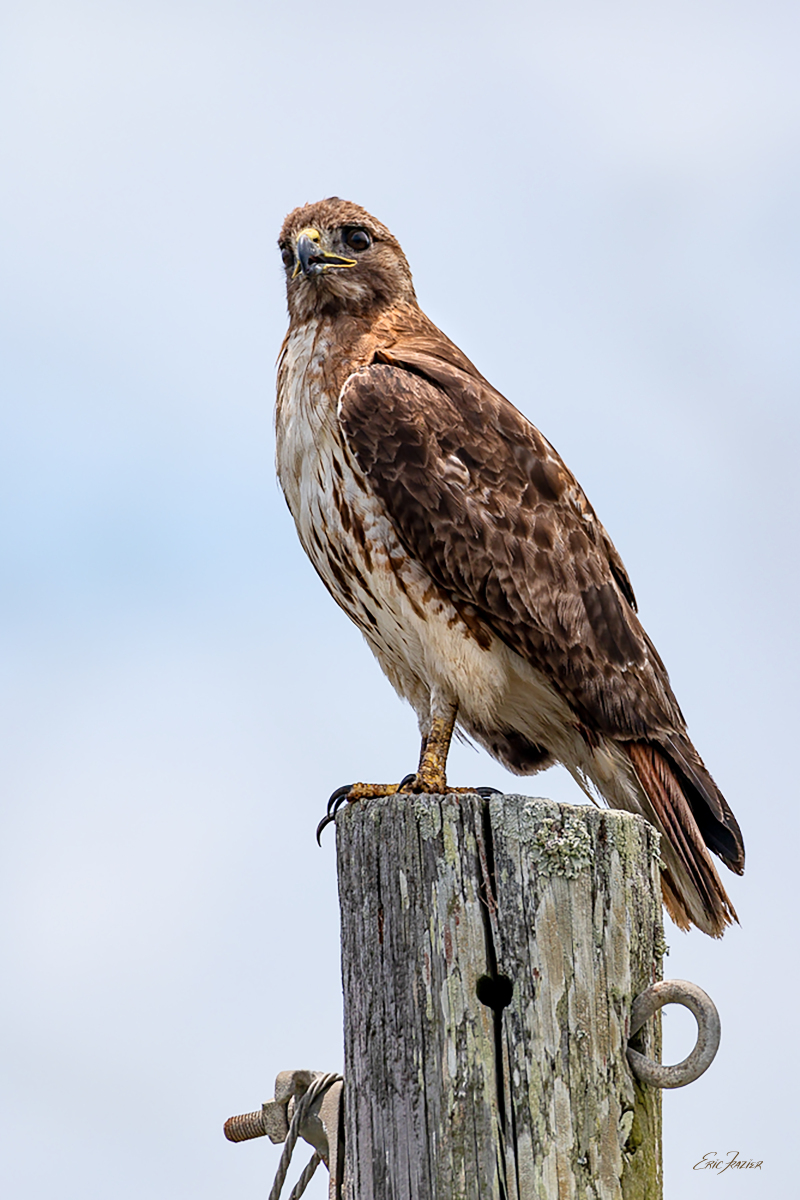
Captured June 25, 2026, by Eric. F. Frazier.
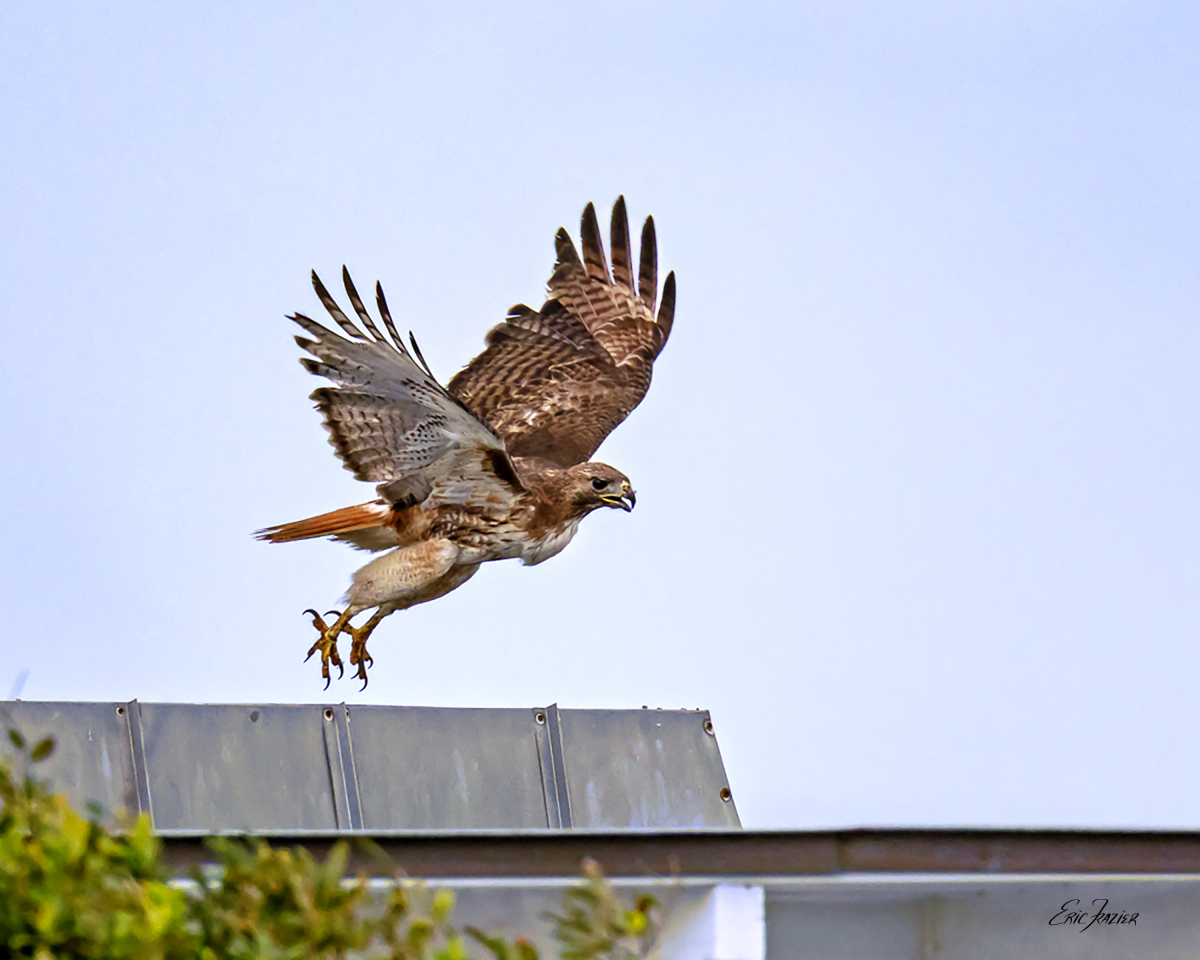
Captured June 21, 2026, by Eric F. Frazier
That steady wind gives hawks another, even higher, perch. When I first saw two hawks in the distance, seemingly suspended in midair, I thought they were kites. But hawks that live full-time by the dunes have learned to spread their wings, fly into the wind, and hover almost motionless, like a drone.
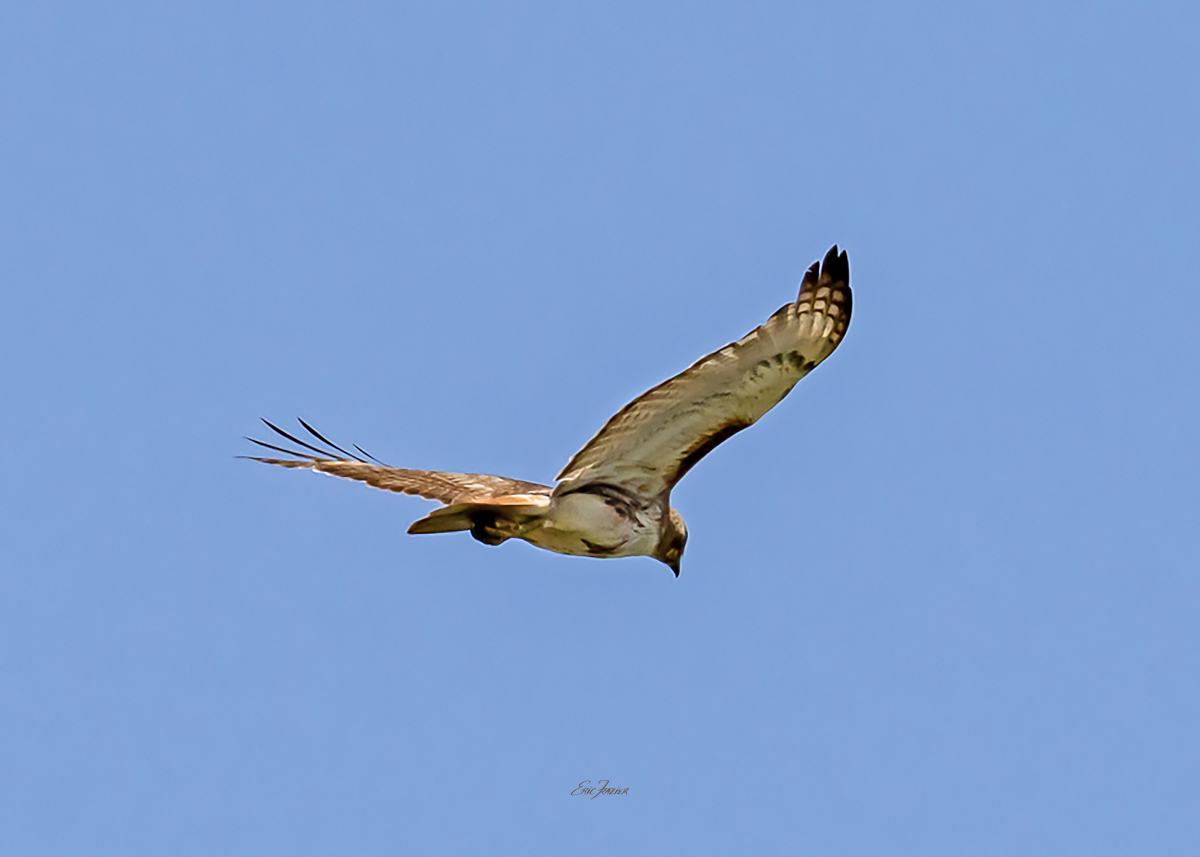
Captured June 21, 2026, by Eric F. Frazier.
I’ve watched large birds soar with the wind and glide in long loops, but these hawks’ ability to harness the steady ocean breeze this way really impressed me. Another reminder that birds and other animals possess extraordinary abilities to match their behavior to local surroundings.