
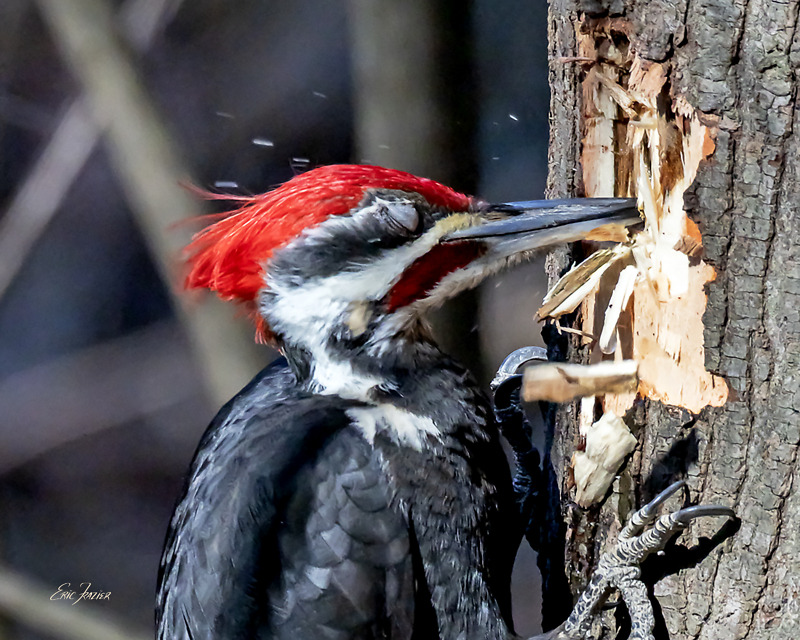
At Shelley Lake Park in Raleigh, I saw a Pileated Woodpecker having lunch on Valentine’s Day. He was dining alone. You might call it a takeout meal.
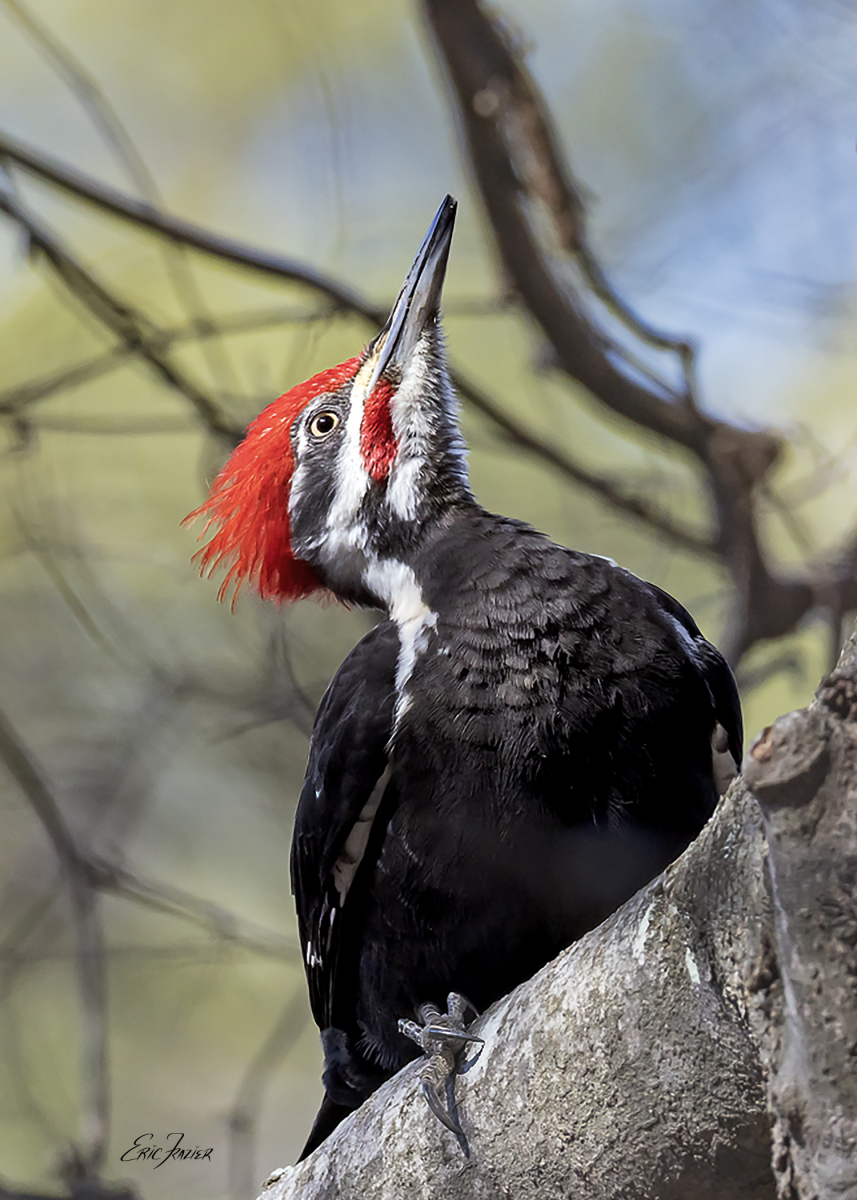
Captured February 13, 2026, by Eric F. Frazier.
Woodpecker Fast Casual
I watched him select a tree, scout a location, bore a hole, feast on carpenter ants and lap up the tree’s sap. All in under 15 minutes and about 20 feet from a paved trail. He appeared so comfortable with me nearby, I wondered if he had performed his feeding routine in front of a camera before.
My main goal for this visit was to check on the resident Bald Eagles, Shelley and Raleigh, and their progress with this year’s brood. During about an hour of observation, they exchanged places guarding the nest once. From the ground, I could not discern its status.
While staring up at the nest, I noticed high on a nearby tree a bright red spot—the head of a woodpecker reflecting in the sun. I began to follow the bird as he checked out various trees at different heights. He would disappear behind a trunk, peck several times, and then thrust his head out to the side.
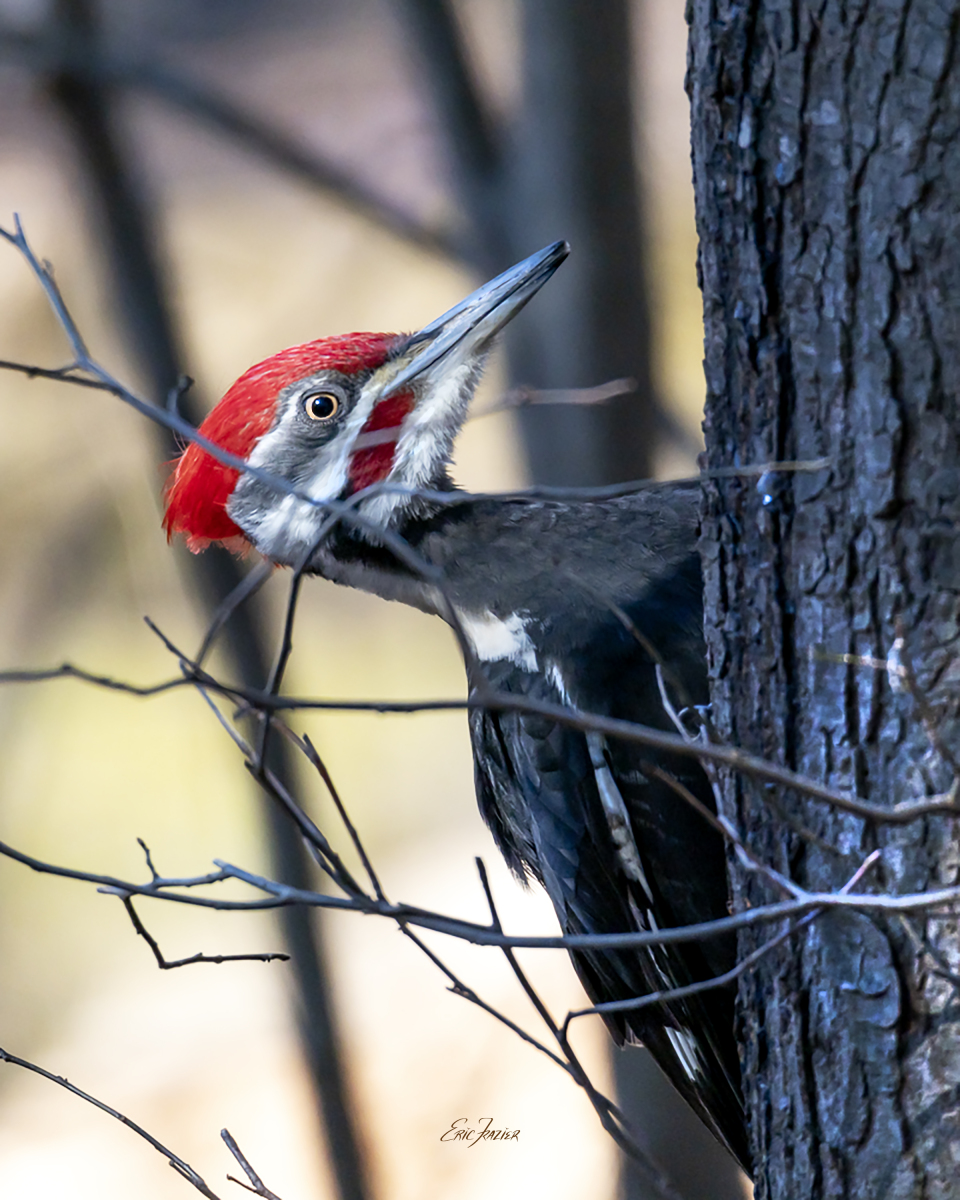
If you see a woodpecker seeming to play hide-and-seek this way, they are probably using their keen hearing to locate insects inside the tree. This guy was listening for his favorite food—carpenter ants.
Built for the Mission
Pileated Woodpeckers are about the size of a crow and comprise the largest woodpecker species in North America. They live year round in most of the eastern United States, across southern Canada, and a narrow swath down the Pacific Northwest coast.
Their bodies are mostly black, and their heads and necks feature black and white steaks topped off by a red-orange crest worthy of Ronald McDonald. Males have a red “mustache” extending from their beaks, while in females this cheek stripe is black.
Those stout beaks are avian jackhammers. Pileated woodpeckers use them to drum loudly on dead trees when claiming territory. To clear bark, they deploy them at an angle, and then they bore holes striking head-on. Their long flexible necks allow them to lean way back before launching each blow. With each strike on the tree, they close their eyes as the wood chips fly.
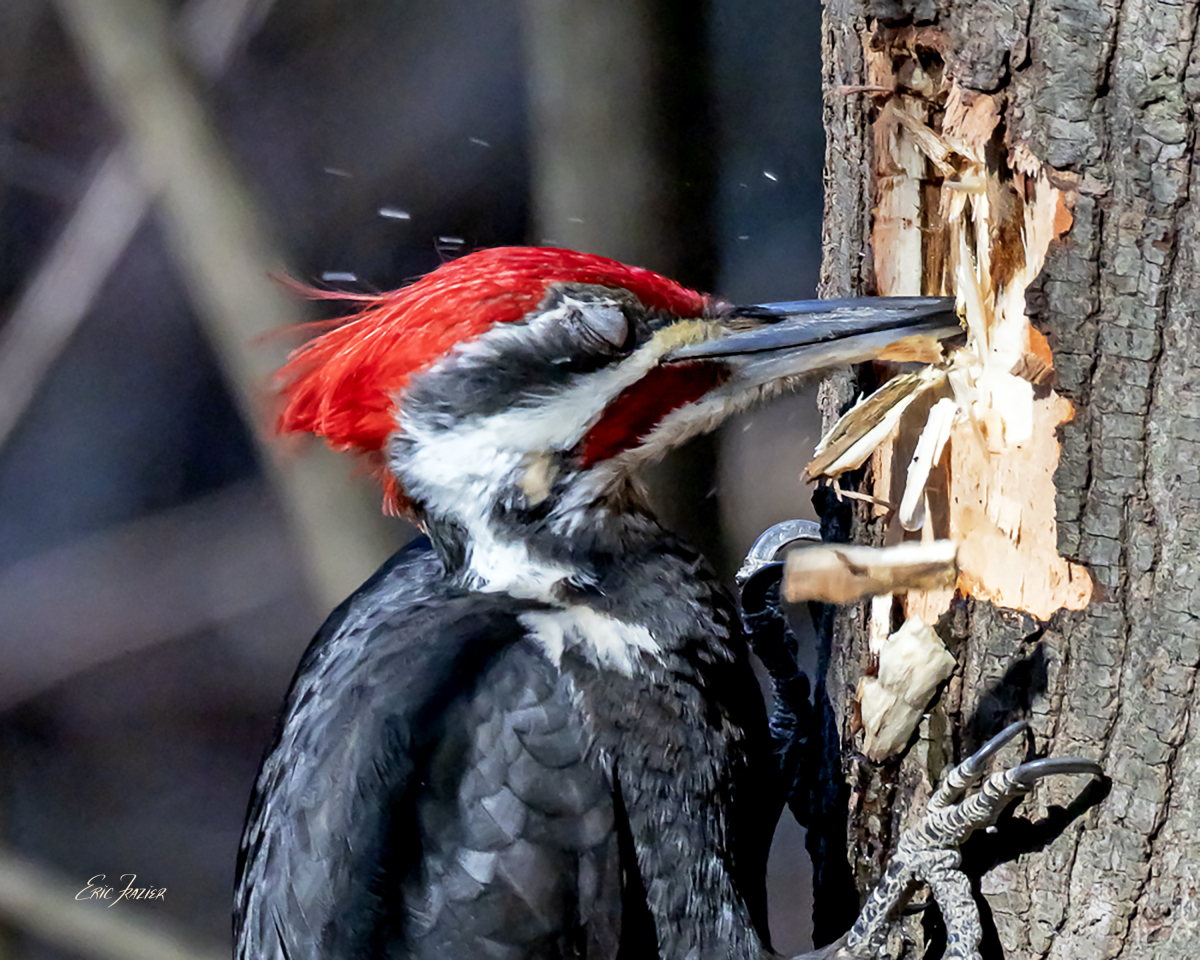
Captured February 13, 2026, by Eric F. Frazier.
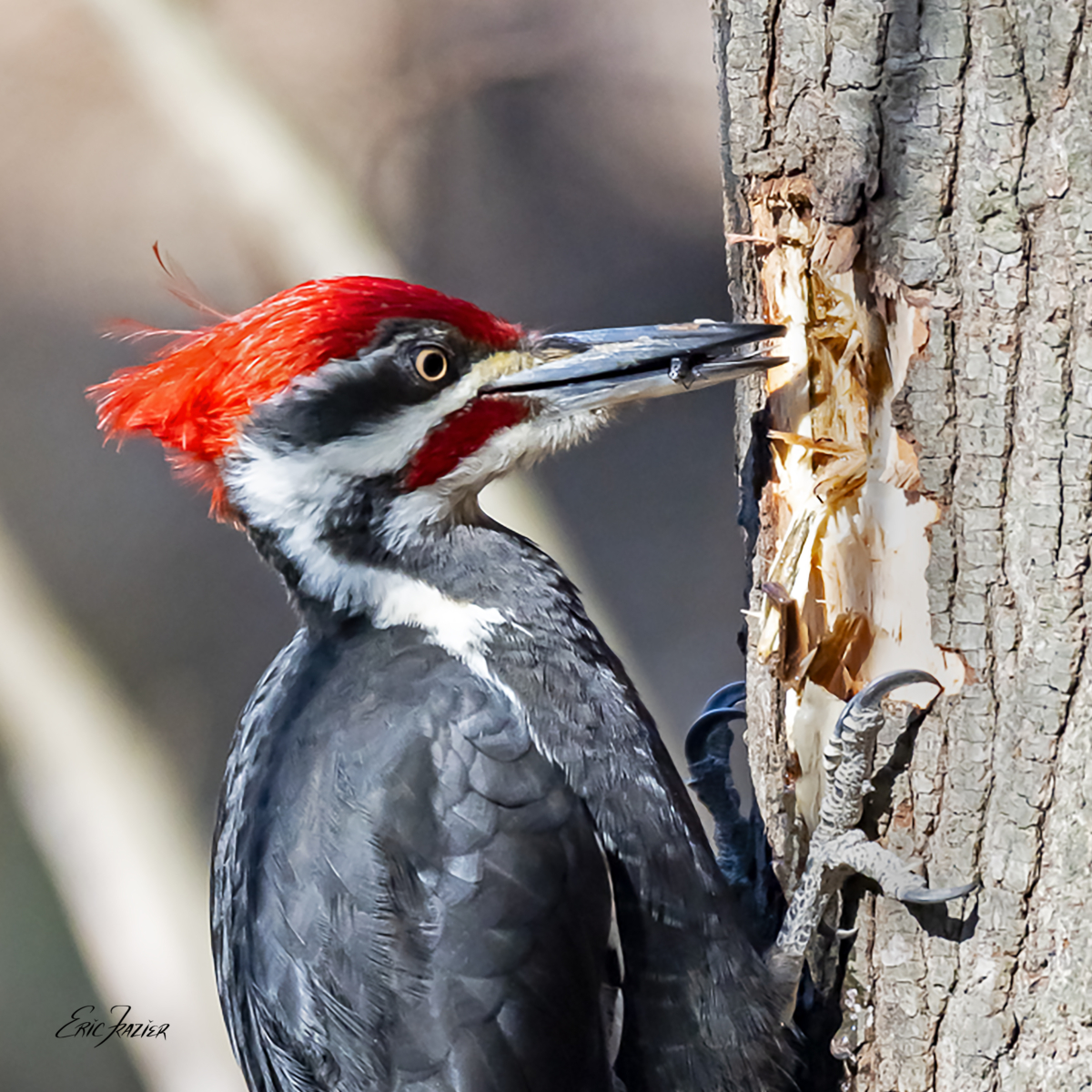
Captured February 13, 2026, by Eric F. Frazier.
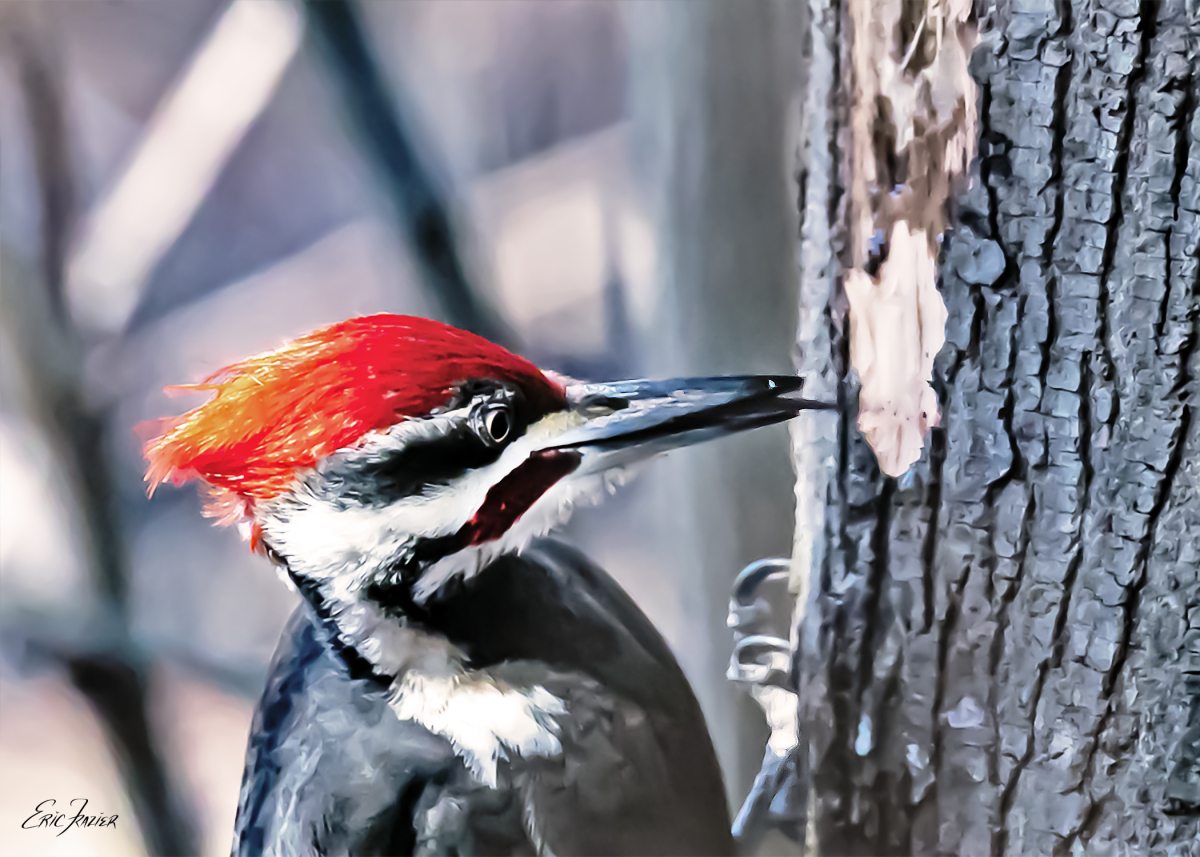
Captured February 13, 2026, by Eric F. Frazier.
Making Room for Dessert
I’ve read that a signature of Pileated Woodpeckers is a rectangular excavation on the bark and a deep oblong hole. I believe I saw why they chisel trees this way.
By the time the woodpecker reached his target—ant tunnels—tree sap oozed down the trunk. He definitely seemed to prefer sipping it with his long tongue from the smooth, newly exposed sapwood, rather than from the rough bark. Hard head, tender tongue?
I don’t understand how his head can take such a pounding. But all the head-banging does produce a quick, protein-rich meal with a built-in syrupy treat.
Pretty sweet, if you’re a woodpecker dining alone on Valentine’s Day.