
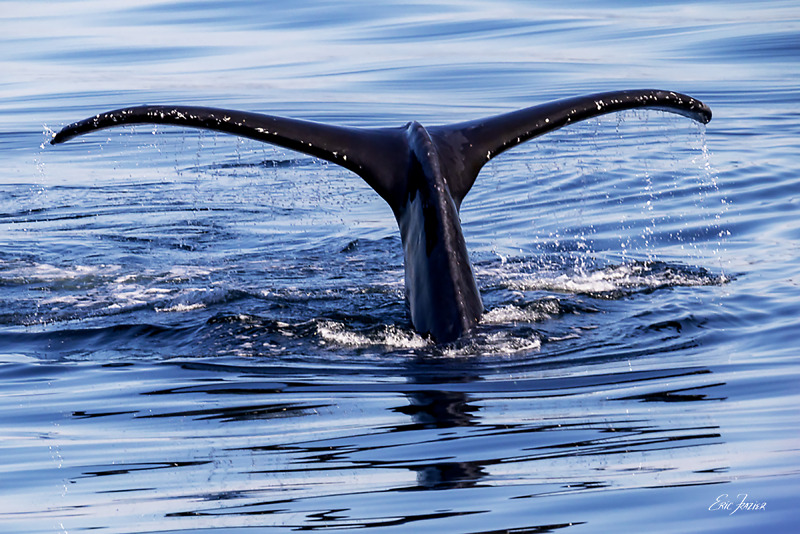
Tails vary widely across species, but few are as distinctive as those of Humpback whales. Humpback tails, also known as flukes, are shaped like and appear to serve similar functions in water as the T-shaped tails on modern jetliners.
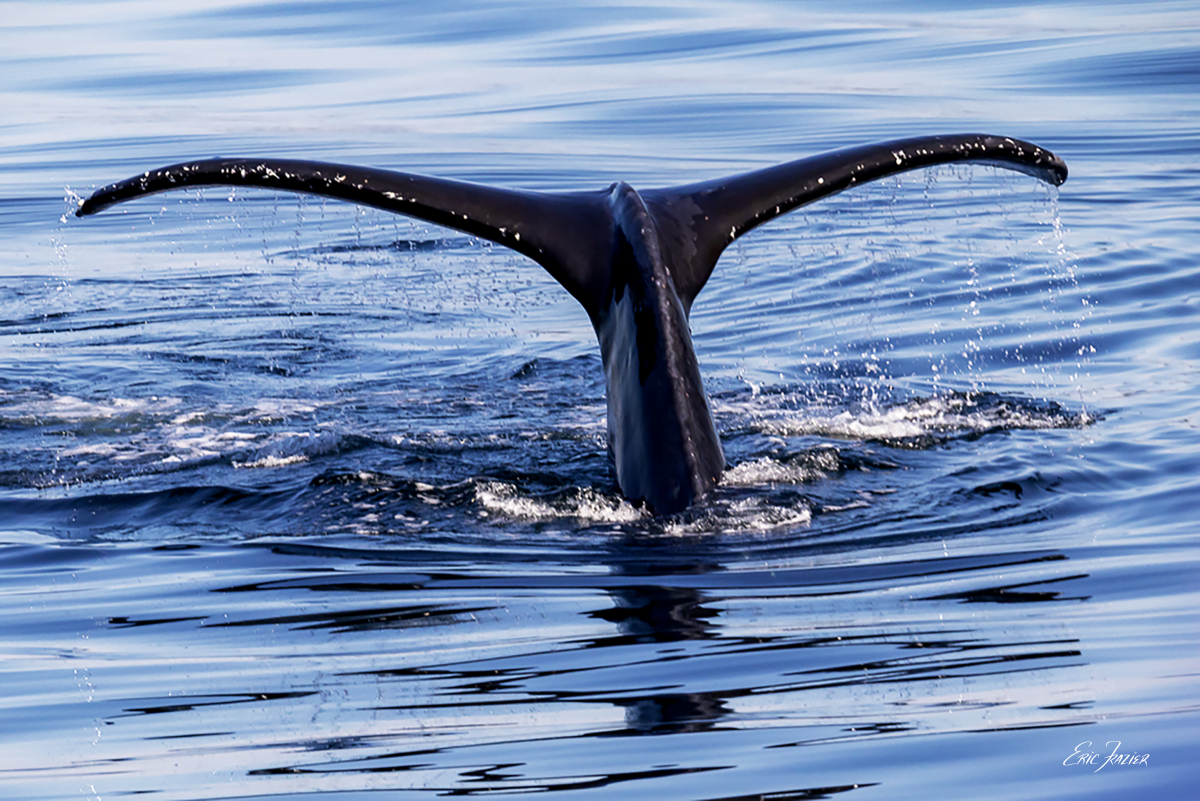
Whale flukes are unique, like human fingerprints, and marine biologists use them to identify individual whales. Helpfully, humpbacks tend to flip their tails high in the air as they dive underwater. So, getting a good look at the fluke is fairly easy from a boat.
Chasing Humpbacks (and Other Whales) is Popular
Curious landlubbers have made whale-watching a $2 billion worldwide tourism industry at port cities in 119 countries, according to a 2009 study. Those numbers are undoubtedly higher today. We joined a boat full of whale-sighting hopefuls in Seattle recently at the end of our Alaska cruise-tour.
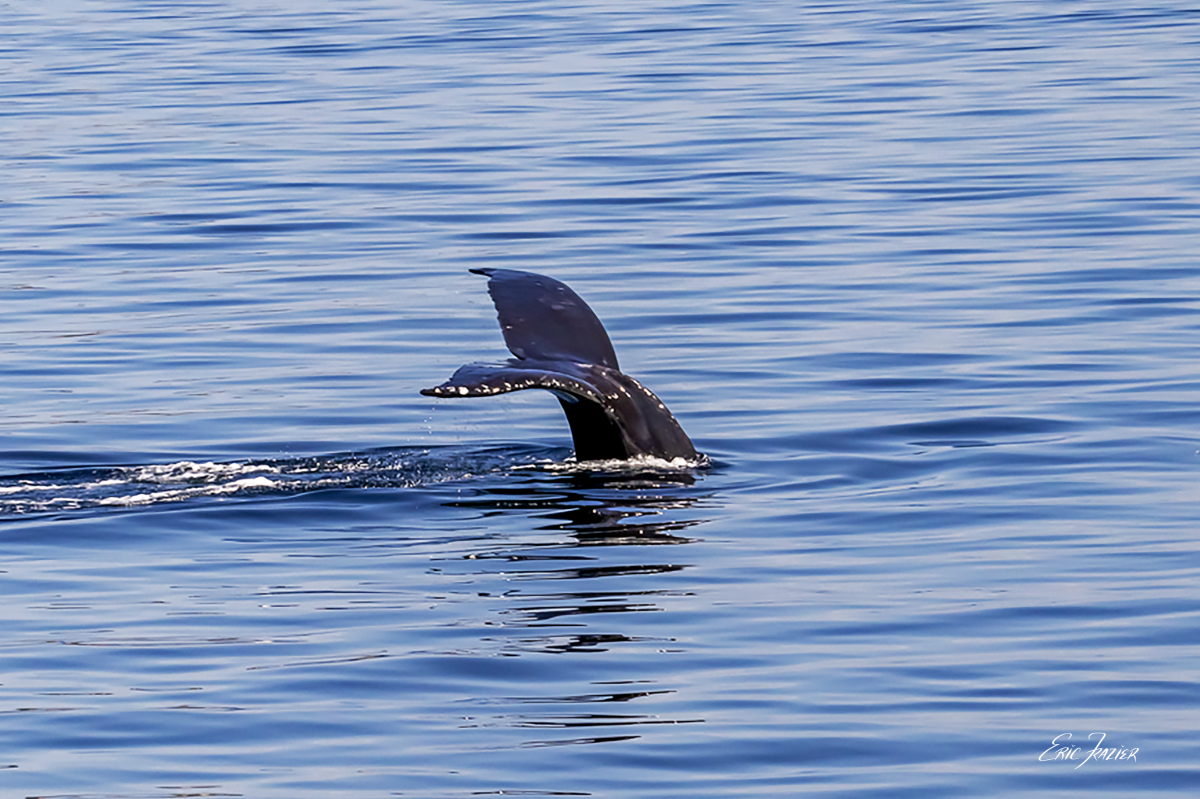
We learned that humpbacks sleep without drowning by shutting down half their brain at a time. A scientific marvel and philosophical conundrum. Is the humpback half awake or half asleep?
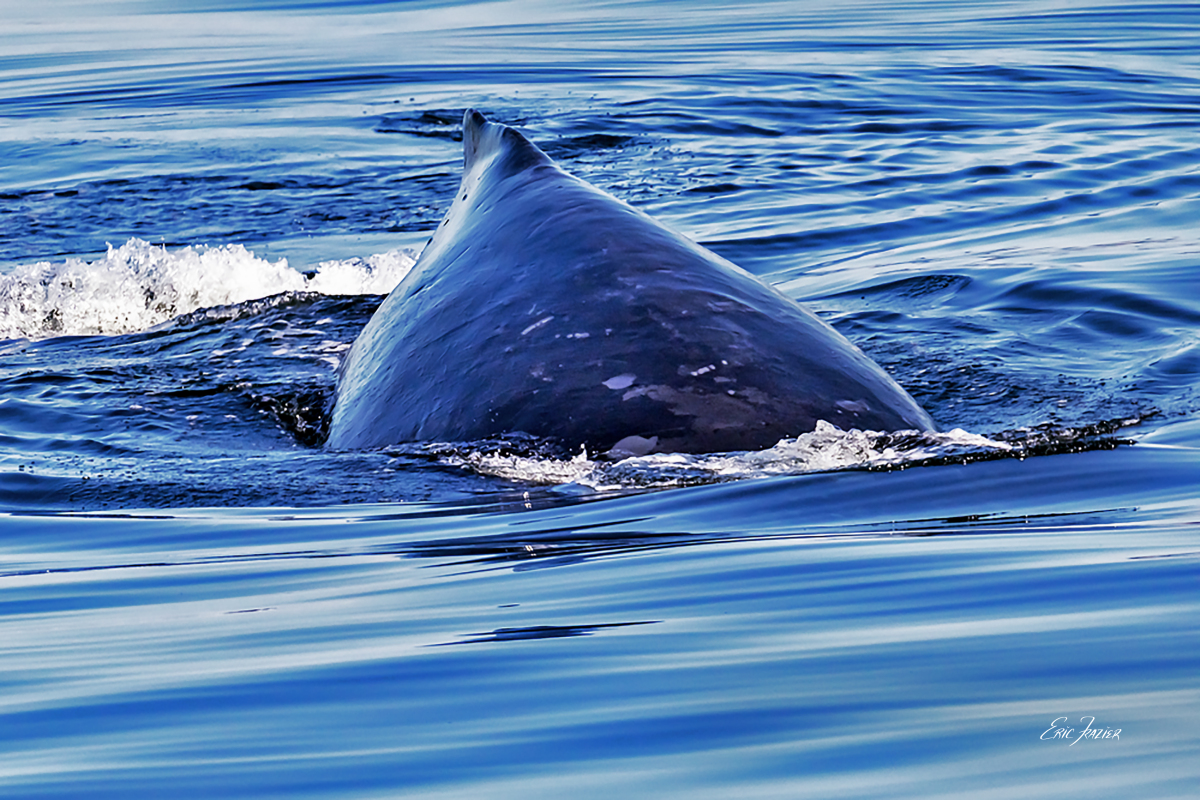
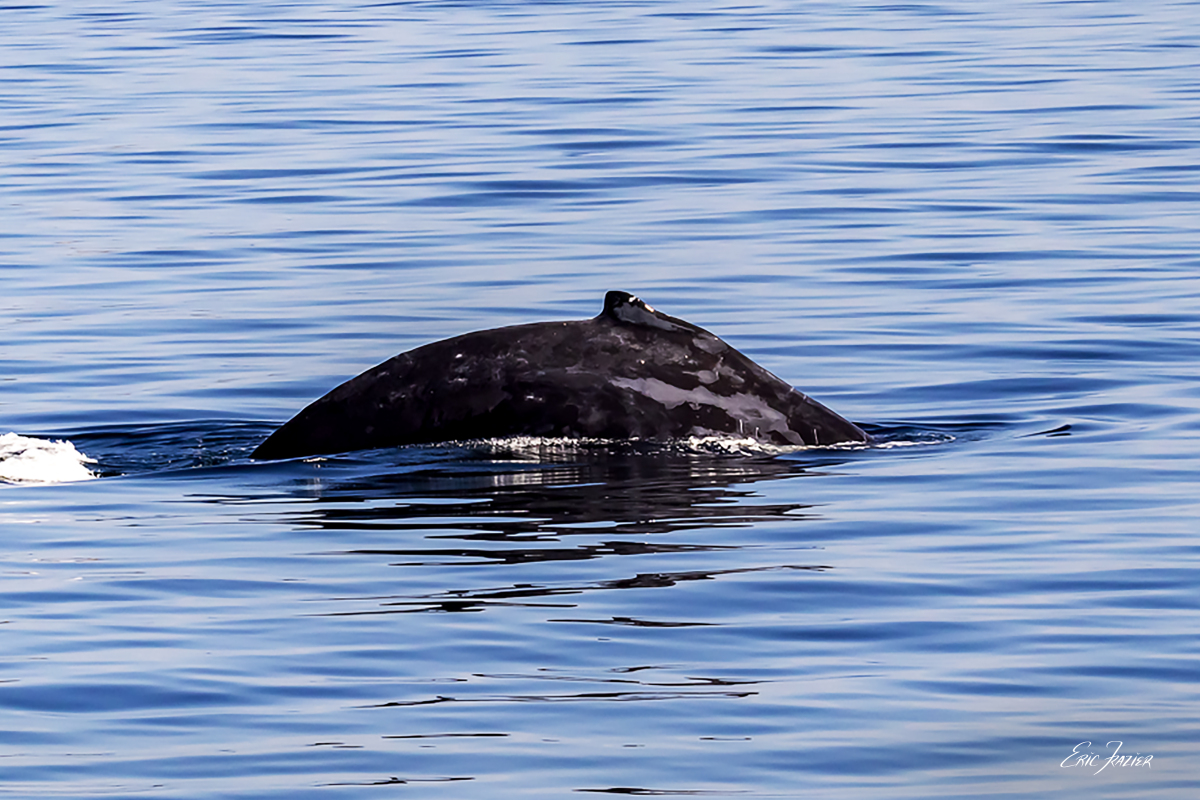
We also learned that the surface-sleep-dive cycle typically lasts about 20-30 minutes. This juvenile humpback followed that pattern. The initial sighting prompted a top-deck scrum of arms holding cell phone cameras. By the third sighting, many passengers left the snoozing giant to go inside and eat lunch.
Unique Identifying Features
Beyond overall size, shape and symmetry of the left and right lobes of the fluke, experts zoom in on specific details, mapping unique scars, deformities, barnacles and pigmentation found on the leading or trailing edges, the central notch, and the underside. Our boat kept us facing the whale’s head each time, so underside views were never available.
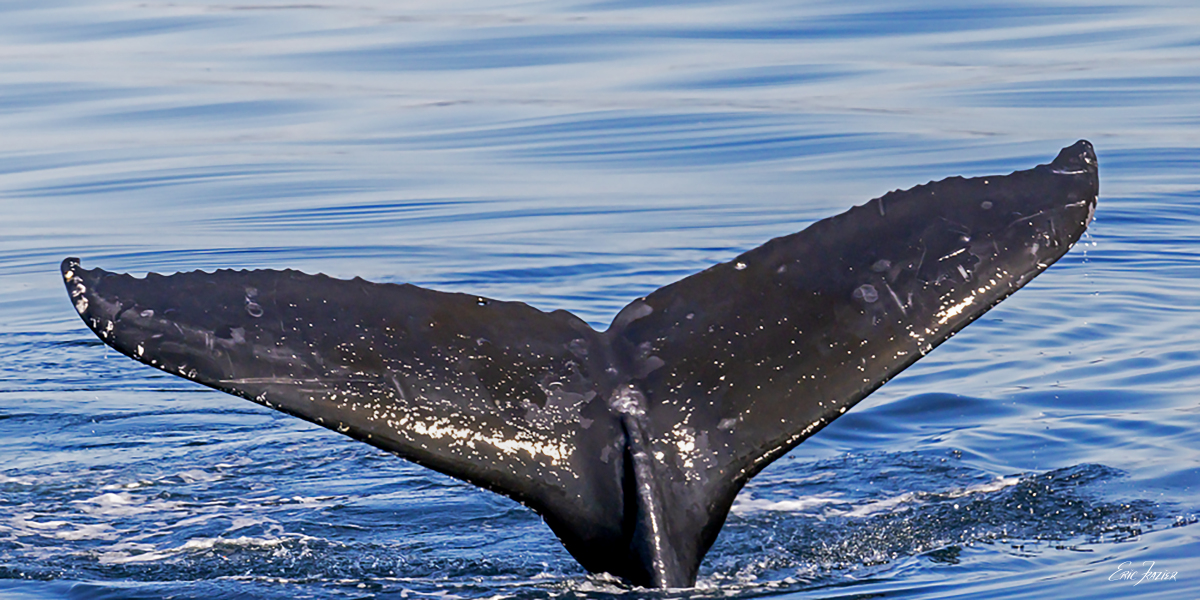
Until I got home and processed these photos on my big screen, I didn’t notice something interesting. The fluke lobe facing left above appears to have a perfectly round hole in it near the trailing edge, two ridges from the notch. You can see the blue water showing through. What could have caused such a small, clean perforation? Another mystery.
Epilogue
A final note: If anyone tells you that duct tape can fix anything, believe them. All of these whale photos were made with a broken lens.
On our way to Mt. Rainier the day before this whale-watching excursion, I opened my camera bag to find my (recently out-of-warranty) Canon RF200mm-800mm telephoto lens in two piece. The lens separated right at the manual focus ring. I’d been required to check the bag on a bus during our departure from Denali National Park.
I, too, felt broken. I spent the rest of the day in a funk.
Next morning, I awoke with a crazy idea. As my wife headed out of our hotel room for decent coffee, I asked her to see if the front desk had any duct tape. I pushed the two sections of my lens back together and wrapped the tape tightly, covering the buttons and focus ring. I crossed my fingers, mounted the lens and looked through my viewfinder. All telemetry and focusing information appeared normal.
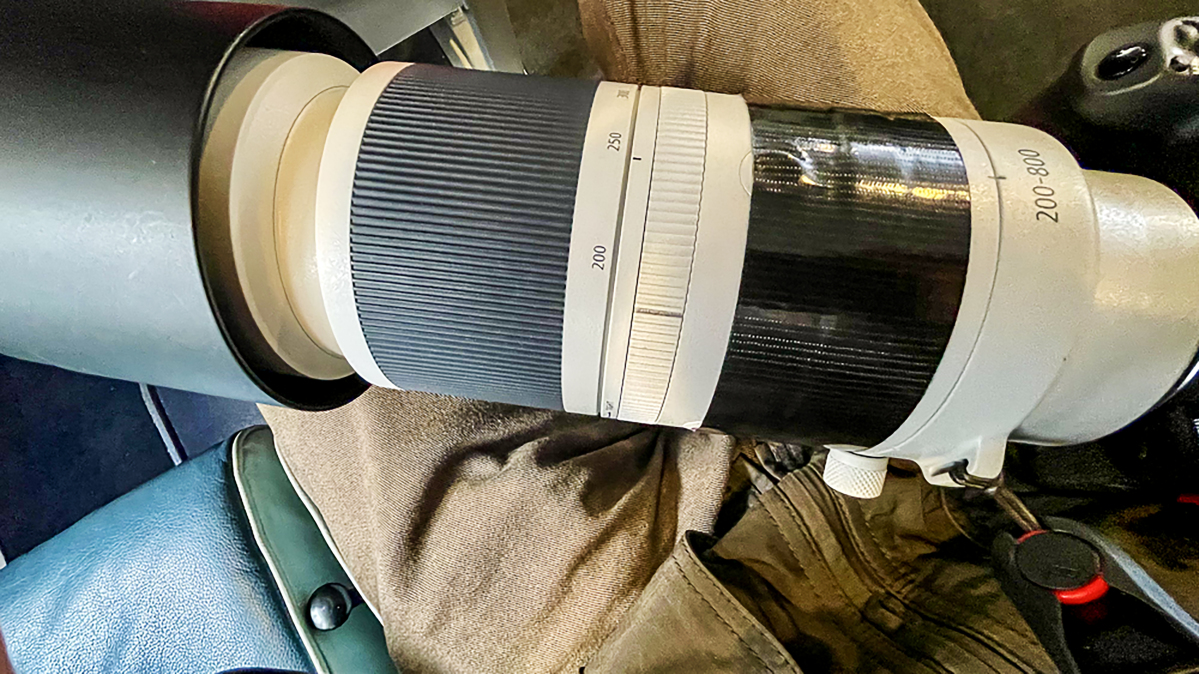
Showing people the repair job sparked fun conversations, and the undetectable photo results almost swayed me to leave the tape in place. Almost. I often need access to those control buttons and manual focus. I sent the lens to Canon for repair, and it’s good as new.